What Is Chiaroscuro? Understanding Light and Shadow in Oil Portraits
Chiaroscuro — the dramatic interplay of light and darkness — has been one of the most powerful techniques in portrait painting for over 400 years. Learn what it is, how it works, and why it makes portraits unforgettable.
The Power of Darkness
There is a reason people stop in front of a Rembrandt. It is not the technique, though the technique is extraordinary. It is not the subject, though the subjects are compelling. It is the light.
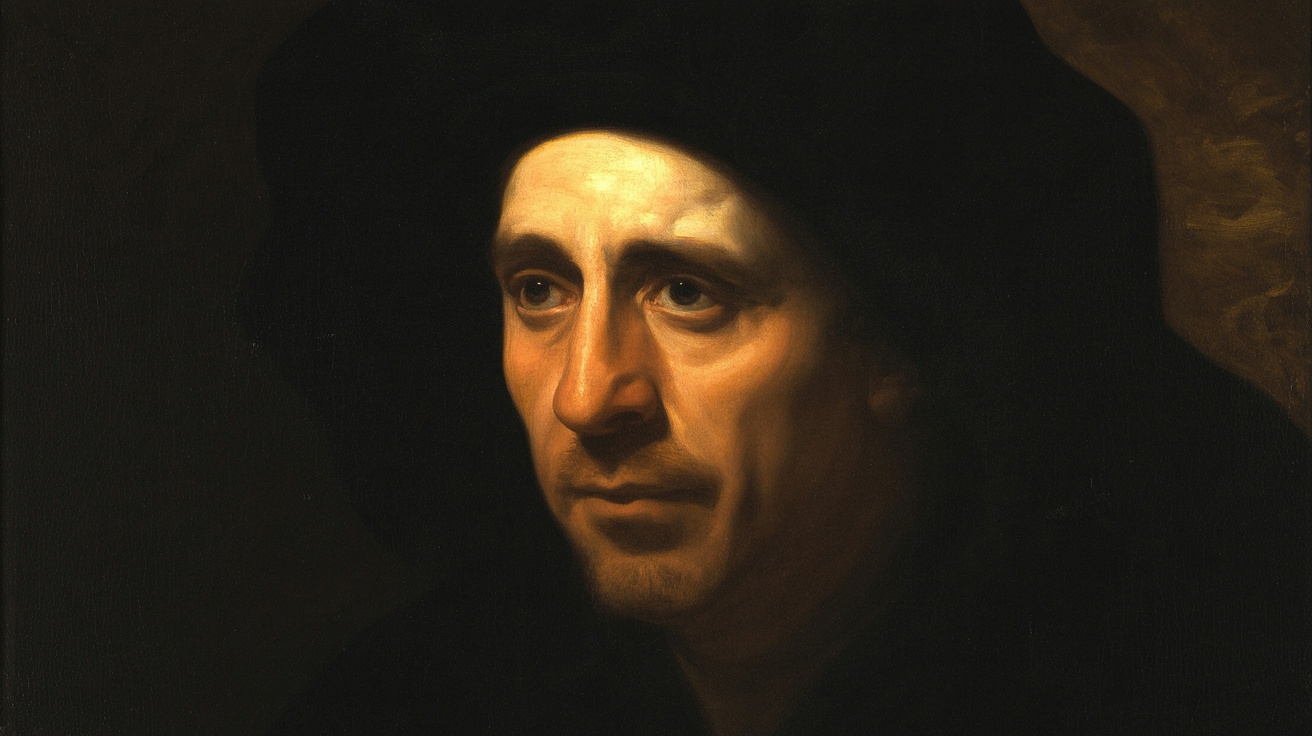
In a Rembrandt portrait, light does not merely illuminate the subject. It reveals them. A face emerges from shadow as though surfacing from deep water — the forehead catching the light, the cheek glowing warm, the eyes holding a spark that seems to come from within. The darkness around them is not absence. It is presence. It is what makes the light mean something.
This is chiaroscuro. And after 400 years, it remains the most emotionally powerful technique in portrait painting.
What Chiaroscuro Means
Chiaroscuro is Italian for "light-dark." In painting, it describes the use of strong tonal contrasts — areas of brilliant light set against areas of deep shadow — to create the illusion of three-dimensional form on a flat surface.
Every painting uses light and shadow to some degree. What makes chiaroscuro distinct is the drama of the contrast. The transition from light to dark is bold, deliberate, and emotionally charged. The technique transforms a portrait from a flat representation into a sculptural, almost cinematic experience.
A Brief History
Leonardo da Vinci (1452–1519)
Leonardo was among the first to use light and shadow systematically to create volume and depth in portraits. His technique, sfumato, softened the transitions between light and dark, producing the mysterious, atmospheric quality visible in the Mona Lisa.
Caravaggio (1571–1610)
Caravaggio pushed chiaroscuro to its extreme — a style called tenebrism. In his paintings, figures burst from near-total darkness, lit by a single, intense light source. The effect is theatrical and immediate. The viewer cannot look away.
Caravaggio's influence was seismic. Within a generation, painters across Europe were working in his shadow — literally.
Rembrandt van Rijn (1606–1669)
Rembrandt transformed chiaroscuro from a dramatic device into a psychological one. In his portraits, light does not just illuminate features — it reveals character. The way light falls across a face tells the viewer where to look and what to feel.
Rembrandt's self-portraits are the supreme example. As he aged, the light in his paintings shifted — from the bright, confident illumination of youth to the softer, more searching light of old age. The technique mirrors the inner journey.
Beyond the Old Masters
Chiaroscuro did not end with the Baroque. The technique has been employed by painters in every era — from Goya and Géricault in the 18th and 19th centuries, through Edward Hopper's dramatic cityscapes, to contemporary portrait artists who continue to harness the emotional power of light and darkness.
How Chiaroscuro Works in a Portrait
The Single Light Source
The foundation of chiaroscuro is a single, directional light source — typically from the side. This creates a clear division between the lit and shadowed portions of the face, defining the cheekbone, the brow, the line of the jaw.
The Dark Background
The background in a chiaroscuro portrait is typically very dark — near black. This serves two purposes: it eliminates distractions, keeping all attention on the subject, and it amplifies the brightness of the illuminated areas through contrast.
The Gradation
The transition from light to shadow is not a hard line but a gradation — a subtle shift through mid-tones that creates the illusion of three-dimensional form. This gradation is where the artist's skill is most apparent. Too abrupt, and the portrait looks cartoonish. Too gradual, and the drama is lost.
The Highlight
Within the illuminated area, a single bright highlight — usually on the forehead, the tip of the nose, or the cheekbone — serves as the visual anchor. This is the brightest point in the painting, and the eye is drawn to it first.
The Eye Spark
The catchlight in the eye — a tiny reflection of the light source — is perhaps the most critical detail in any chiaroscuro portrait. It brings the subject to life. Without it, even a technically perfect portrait looks dead. With it, the subject seems to be looking back at you.
Why Chiaroscuro Is So Emotionally Powerful
It Creates Focus
By submerging the background and peripheral details in darkness, chiaroscuro forces the viewer to look exactly where the artist wants them to look. There is no visual noise. There is only the face.
It Suggests Depth
The human brain interprets light and shadow as indicators of three-dimensional form. A face painted in chiaroscuro appears to project outward from the canvas — it has volume, weight, and physical presence.
It Evokes Emotion
Darkness carries emotional weight. A face emerging from shadow suggests mystery, introspection, gravity, and resilience. The technique naturally imbues the subject with a sense of significance and depth.
It Is Cinematic
Modern viewers, accustomed to dramatic film lighting, respond instinctively to chiaroscuro. The single light source, the deep shadows, the illuminated face — it looks like a scene from a film by Ridley Scott or Roger Deakins. The technique speaks a visual language that feels both ancient and utterly contemporary.
When to Request Chiaroscuro for Your Portrait
Memorial Portraits
The gravity and reverence of chiaroscuro make it exceptionally powerful for memorial portraits. A face emerging from darkness carries a symbolic weight — the light of a life against the darkness of absence.
Distinguished Subjects
Grandparents, military veterans, professionals with long and distinguished careers — chiaroscuro honours the character that age and experience create.
Statement Pieces
A chiaroscuro portrait commands attention on any wall. If you want the painting to be the undeniable focal point of a room, this is the technique to request.
Dramatic Interiors
In rooms with dark walls, moody lighting, or rich furnishings, a chiaroscuro portrait feels completely at home. It amplifies the atmosphere rather than fighting it.
The PaintedForU Approach
When you request a chiaroscuro or dramatic-style portrait, our artists:
- Study the reference photo for the strongest light direction
- Plan the composition to maximise the light-dark contrast
- Build the painting in layers — dark background first, then mid-tones, then highlights
- Refine the gradation until the face emerges from shadow with lifelike depth
- Add the eye spark — the final, crucial detail that brings the portrait to life
Frequently Asked Questions
What does chiaroscuro mean?
Chiaroscuro is an Italian term meaning 'light-dark.' In painting, it refers to the use of strong contrasts between light and shadow to create a sense of volume, depth, and drama. It was pioneered by Renaissance artists and perfected by Caravaggio and Rembrandt.
Can I request a chiaroscuro-style portrait?
Yes. Simply request a dramatic or Baroque-style portrait when you place your order. Our artists are skilled in chiaroscuro technique and can create a portrait with striking light-dark contrasts that give your subject extraordinary presence.
Does chiaroscuro work for all portrait subjects?
Chiaroscuro is particularly powerful for subjects with strong facial features and character. It works beautifully for memorial portraits, military tributes, and distinguished elder subjects. It is less commonly used for children or light-hearted compositions, where softer lighting is more appropriate.
What is the difference between chiaroscuro and tenebrism?
Tenebrism is an extreme form of chiaroscuro where most of the composition is shrouded in darkness, with the subject lit by a single, dramatic light source. Chiaroscuro is the broader technique; tenebrism is its most intense expression, exemplified by Caravaggio.
Which artists are famous for chiaroscuro?
Caravaggio and Rembrandt are the most celebrated practitioners. Leonardo da Vinci pioneered the technique, and it was developed further by artists including Georges de La Tour, Artemisia Gentileschi, and Jusepe de Ribera.
Does a chiaroscuro portrait need a dark background?
Typically, yes. The dark background is essential to the technique — it creates the contrast that makes the illuminated areas glow. The darkness is not emptiness; it is a compositional element that gives the light its power.
Sarah Chen
Senior Art Consultant
Sarah is a Senior Art Consultant at PaintForU with over 12 years of experience in custom portrait commissions. She specialises in helping clients choose the perfect style and composition for their portraits.
Ready to Create Your Portrait?
Free worldwide shipping, unlimited revisions, and 100% satisfaction guaranteed.
Start Your Portrait