
How to Care for Your Oil Painting: Storage, Cleaning, and Display
An oil painting that is properly cared for will last for centuries. This guide covers everything you need to know about hanging, lighting, cleaning, and storing your custom portrait to keep it beautiful for generations.
An Investment That Lasts Forever — If You Let It
An oil painting is one of the most enduring art forms ever created. The Mona Lisa is over 500 years old. Rembrandt's self-portraits are approaching 400. With proper care, the painting you commission today will look beautiful for centuries.
But "proper care" does not mean museum-level conservation. It means a handful of simple habits — where you hang it, how you dust it, what you keep it away from. These small acts of attention are the difference between a painting that ages gracefully and one that deteriorates unnecessarily.
This guide covers everything you need to know about caring for your custom oil portrait.
Displaying Your Painting
Where to Hang
The location you choose for your painting is the single most important care decision you will make.
Ideal conditions:
- Stable room temperature (18–24°C / 64–75°F)
- Moderate humidity (40–60%)
- No direct sunlight
- Away from heat sources
- Good air circulation
- Direct sunlight — UV light fades pigments over time, even through varnish. If the painting must be near a window, use UV-filtering curtains or blinds.
- Above a fireplace — rising heat and soot from an active fireplace damage both paint and canvas. If the fireplace is purely decorative and never used, it is safe.
- Near radiators or heating vents — direct heat dries out canvas and can cause cracking.
- Bathrooms — humidity fluctuations cause canvas to expand and contract, which can eventually crack the paint layer.
- Kitchens — cooking fumes, grease, and steam settle on surfaces over time.
How to Hang
- Use two hooks rather than one for stability, especially for larger paintings.
- Ensure the wall hook or hanger is rated for the painting's weight.
- Leave a small gap between the painting and the wall to allow air circulation behind the canvas.
- Use felt pads on the back corners to prevent the frame from scratching the wall and to maintain the air gap.
Lighting
Good lighting enhances an oil painting dramatically.
- Picture lights — warm-toned LED lights (2700K–3000K) mounted above the frame provide even, flattering illumination.
- Track lighting — adjustable ceiling lights aimed at the painting create a gallery effect.
- Avoid fluorescent lighting — it can give colours a flat, cold appearance.
- LED is preferred — modern LEDs produce minimal UV radiation and very little heat, making them the safest option for illuminating artwork.
Cleaning Your Painting
Routine Dusting (Monthly)
Dust is the primary enemy of oil paintings in a domestic setting. It settles on the varnish surface and, over time, dulls the colours and attracts moisture.
How to dust:
- Use a clean, dry, soft-bristled brush (a dedicated art brush or a clean makeup brush works well)
- Brush gently in one direction — top to bottom — to lift dust off the surface
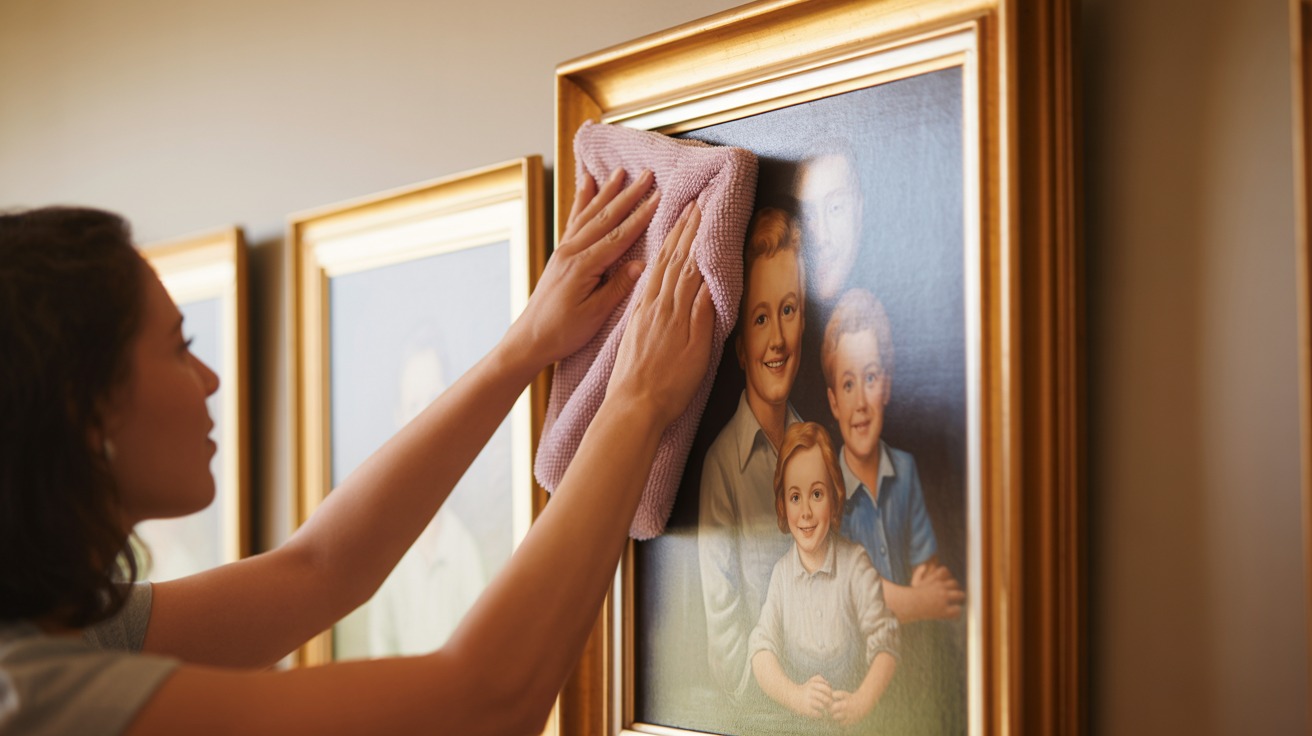
- Alternatively, use a clean, dry microfibre cloth with the lightest possible pressure
- Never rub in circles — this pushes dust into the varnish rather than removing it
What Never to Use
- Water — even a damp cloth can damage varnish and pigment
- Household cleaners — sprays, wipes, and detergents contain chemicals that dissolve varnish
- Bread — an old myth; it leaves residue and can attract insects
- Saliva — another old myth; the enzymes in saliva can damage paint
Deep Cleaning
If your painting has accumulated grime beyond what dusting can remove — smoke stains, cooking residue, or years of neglect — do not attempt to clean it yourself. Contact a professional art conservator. Improper cleaning can cause irreversible damage.
Protecting the Varnish
The varnish on your painting is its first line of defence. It protects the paint layer from dust, moisture, UV light, and atmospheric pollutants.
PaintedForU Varnish
Every PaintedForU painting arrives with a professional-grade protective varnish. This coating:
- Unifies the painting's sheen (eliminating dull spots)
- Provides UV protection
- Creates a barrier against dust and moisture
- Can be removed and reapplied by a conservator if needed
Re-Varnishing
Over decades, varnish can yellow or become cloudy. This is normal and does not damage the painting. A conservator can safely remove the old varnish and apply a fresh coat, restoring the painting to its original vibrancy. This is typically needed only every 20–50 years.
Storing a Painting
If you need to store a painting — during a move, renovation, or while deciding where to hang it — proper storage prevents damage.
Short-Term Storage (Days to Weeks)
- Store upright, leaning slightly against a wall
- Place the painted surface facing inward (toward the wall) for protection
- Ensure the surface does not touch anything — use a spacer or lean another canvas back-to-back
- Keep in a room with stable temperature and humidity
Long-Term Storage (Months to Years)
- Wrap the painted surface in acid-free tissue paper (available from art supply stores)
- Cover the entire painting with a breathable cotton cloth or sheet
- Never use plastic wrap or bin bags — they trap moisture and create conditions for mould
- Store upright in a cool, dry, dark room
- If storing multiple paintings, place cardboard or foam between each one
- Check periodically for signs of moisture, mould, or pest damage
During a Move
- Keep the painting in your car, not in the removal van (where temperature extremes and vibration are common)
- If it must go in the van, wrap it thoroughly in blankets and secure it upright so it cannot slide
- Never store a painting flat with heavy objects on top — the weight can warp the canvas
Common Problems and What to Do
Yellowing Varnish
Cause: Natural aging of the varnish layer. Solution: A conservator can remove and replace the varnish.
Small Cracks in the Paint
Cause: Age, fluctuating humidity, or the canvas drying unevenly. Solution: Minor cracking is cosmetic and does not require immediate attention. If cracks are extensive, consult a conservator.
Sagging Canvas
Cause: Humidity has stretched the canvas. Solution: The canvas can be re-stretched by a professional framer. In some cases, the tension resolves as humidity stabilises.
Dents in the Canvas
Cause: Impact from the back. Solution: Very minor dents can sometimes be corrected by lightly misting the back of the canvas with water and allowing it to dry taut. For larger dents, consult a professional.
The Simple Summary
Caring for an oil painting is not complicated:
- Hang it right — stable temperature, no direct sun, no heat sources
- Dust it gently — once a month with a soft brush
- Do not clean it yourself — for anything beyond dusting, call a professional
- Store it properly — upright, wrapped in acid-free tissue, in a cool dry place
Every PaintedForU portrait comes with unlimited free revisions, free shipping, and a 100% satisfaction guarantee.
Start your portrait now and own something that lasts forever.Frequently Asked Questions
How do I clean an oil painting at home?
Dust gently with a soft, dry microfibre cloth or a clean, soft-bristled brush. Always dust in one direction, not in circles. Never use water, household cleaners, or damp cloths on an oil painting. For deeper cleaning, consult a professional conservator.
Where should I hang an oil painting?
Hang in a room with stable temperature and humidity, away from direct sunlight, heat sources (radiators, fireplaces, heating vents), and moisture (bathrooms, kitchens near stoves). Indirect natural light or warm-toned picture lighting is ideal.
How long does an oil painting last?
With proper care, an oil painting lasts for centuries. Museum collections include oil paintings from the 1400s that are still vibrant today. The combination of quality pigments, canvas, and protective varnish creates an artwork designed to endure.
Do I need to varnish my oil painting?
PaintedForU paintings arrive pre-varnished with a protective coating. This varnish protects against dust, moisture, and UV light. Re-varnishing is typically needed only after 20–50 years, or sooner if the painting is displayed in challenging conditions.
Can I hang an oil painting in a bathroom?
It is not recommended. Bathrooms experience significant humidity fluctuations that can damage canvas and paint over time. If you want art in a bathroom, consider a framed print or a painting behind glass.
How should I store an oil painting if I am not displaying it?
Store upright (not flat) in a cool, dry place away from direct sunlight. Wrap the painting surface in acid-free tissue paper and cover with a breathable cloth — never use plastic wrap, which traps moisture. Place cardboard between multiple paintings to prevent surface contact.
Sarah Chen
Senior Art Consultant
Sarah is a Senior Art Consultant at PaintForU with over 12 years of experience in custom portrait commissions. She specialises in helping clients choose the perfect style and composition for their portraits.
Ready to Create Your Portrait?
Free worldwide shipping, unlimited revisions, and 100% satisfaction guaranteed.
Start Your Portrait

