How to Get the Best Photo for a Pet Portrait Painting
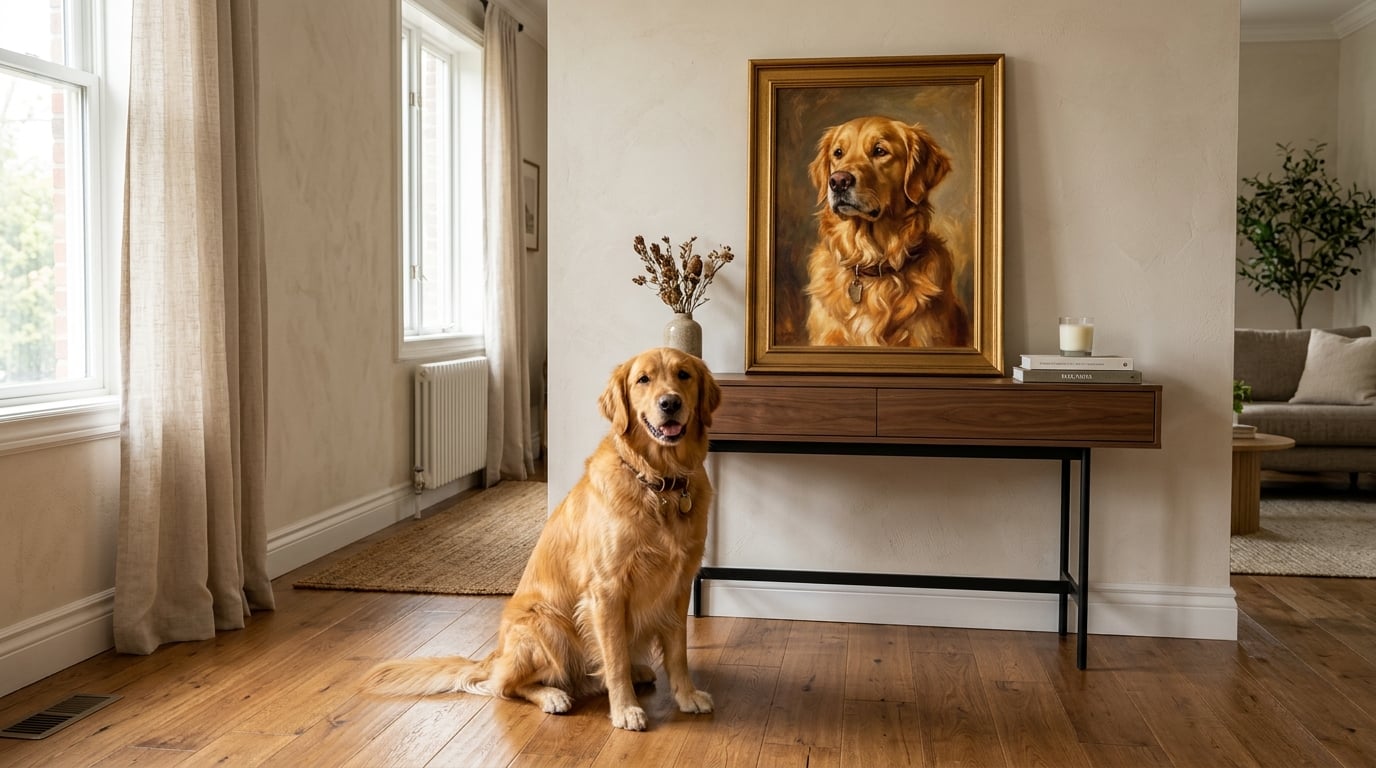
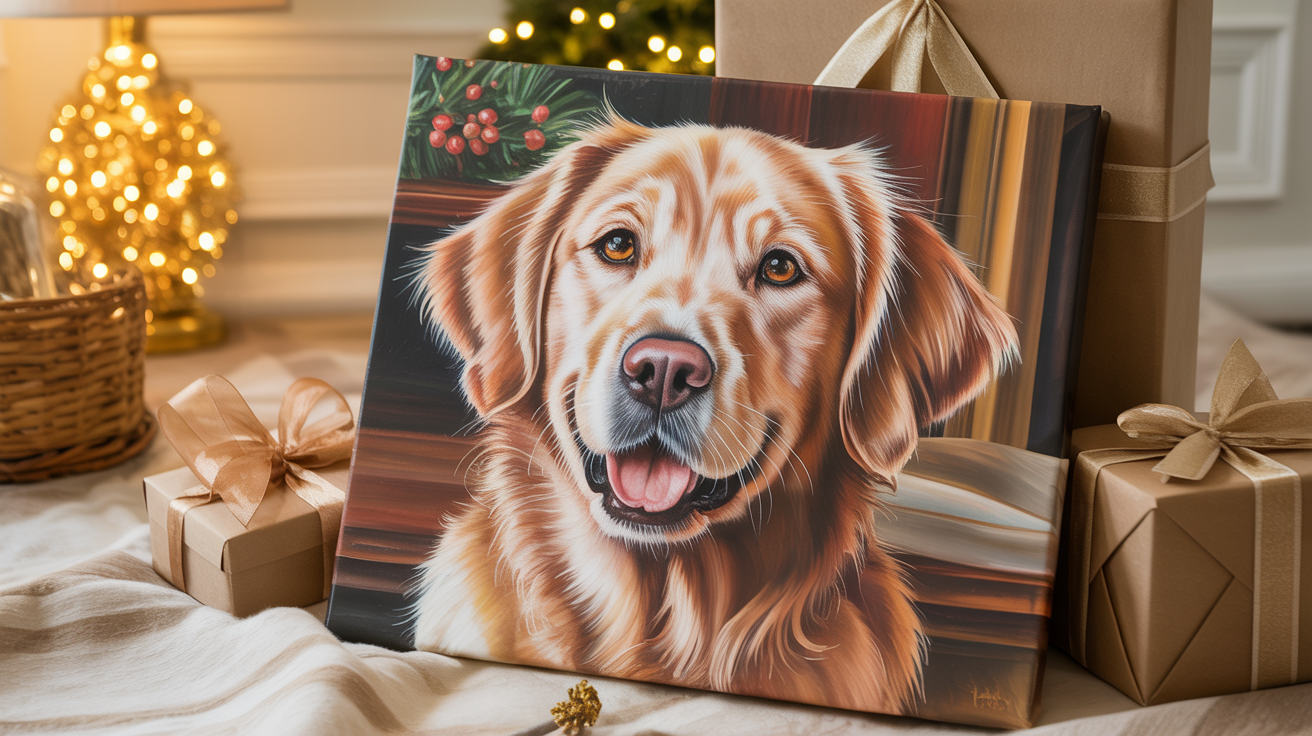
The secret to a stunning pet portrait painting is the photo you start with. This complete guide covers everything you need to know — from lighting and angles to species-specific tips for dogs, cats, horses, and more — so your artist has the perfect reference to work from.
Why Your Photo Matters More Than You Think
When you commission a custom pet portrait painting, the reference photo is not just a starting point — it is the foundation of everything. Your artist will study that photo for hours, interpreting every detail: the way light catches your pet's fur, the depth and warmth of their eyes, the subtle angle of their ears that signals curiosity, contentment, or that particular brand of mischief only you recognise.
A great photo does not require a professional camera or a studio setup. What it does require is good light, a clear view of your pet's face, and a moment that feels genuinely like them.
This guide will show you exactly how to capture that moment — whether you are photographing a hyperactive puppy, a regal cat, an elderly dog you want to memorialise, or any other beloved pet. Follow these pet portrait photo tips and you will give your artist everything they need to create something extraordinary.
The Golden Rules of Pet Portrait Photography
These fundamentals apply to every pet, every breed, and every species. Master these and you are 90% of the way to a perfect reference photo.
1. Natural Light Is Everything
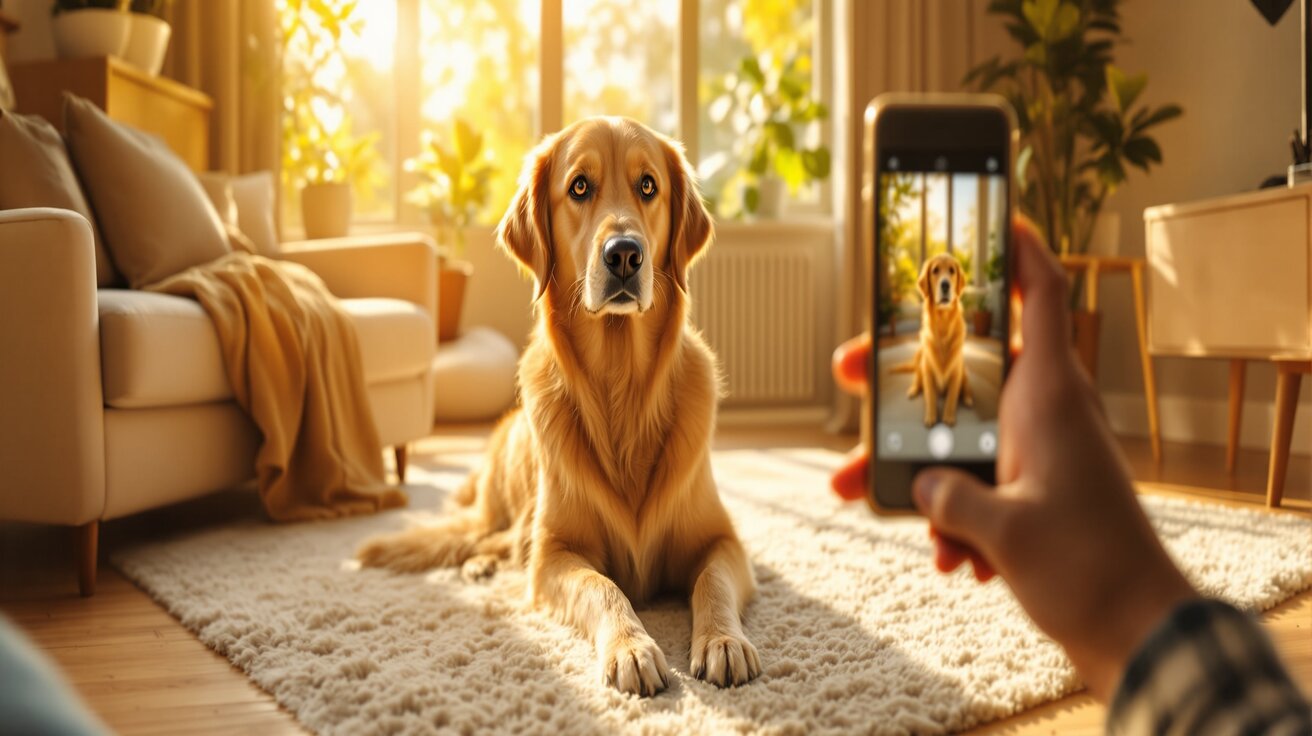
This is the single most important factor in your photo. Natural, diffused light reveals the true colours, textures, and tonal variations of your pet's coat. It creates soft, flattering shadows that give the face depth and dimension. It brings out the luminosity in your pet's eyes.
The best light for pet photography:
- Near a large window on an overcast day — the clouds act as a giant softbox, scattering light evenly without harsh shadows
- Open shade outdoors — under a tree canopy, on a covered porch, or in the shadow of a building on a sunny day
- Golden hour — the hour after sunrise or before sunset, when sunlight is warm, directional, and deeply flattering
- Camera flash — it flattens features, creates harsh highlights, produces unnatural red-eye or green-eye in animals, and washes out coat colour
- Overhead midday sun — creates deep shadows under the brow, nose, and chin that obscure facial features
- Mixed lighting — a room lit by both a window and an artificial lamp creates competing colour temperatures that confuse the image
2. Get Down to Their Eye Level
This is the difference between a snapshot and a portrait. When you photograph your pet from standing height, you get a view that looks down at them — it minimises their presence and creates an emotional distance.
When you crouch, kneel, sit, or lie on the floor to meet your pet at their eye level, something changes. The photo feels intimate. Your pet looks directly at you — or past you with that contemplative gaze — and the resulting image has the presence and gravity of a real portrait.
For small dogs and cats, this might mean lying flat on your stomach. For large dogs or horses, you may only need to crouch slightly. The key is that the camera lens is at the same height as your pet's eyes.
3. Focus on the Eyes
The eyes are the emotional centre of every portrait. They are where the viewer connects with the subject — and they are what your artist will spend the most time perfecting.
Make sure your pet's eyes are:
- Sharp and in focus — tap on the eyes when shooting with a smartphone to lock focus
- Well-lit — visible iris detail, not lost in shadow
- Showing a catchlight — the small reflection of a light source in the eye that makes it look alive
4. Capture Personality, Not Perfection
The photos that produce the most beloved portraits are rarely the most technically perfect. They are the ones that feel like your pet.
The head tilt. The half-closed nap eyes. The one ear that always flops forward. The tongue hanging sideways. The dignified, regal stare. The dopey grin. These are the details that make your heart swell when you see the finished painting — because the artist captured the thing that makes your pet yours.
Do not try to force a pose. Instead, set up your lighting, get your camera ready, and then let your pet be themselves. React to what they give you. The magic is in the unguarded moments.
5. Keep the Background Simple
A cluttered background distracts from your pet and makes it harder for the artist to see their outline, coat detail, and posture clearly.
Ideal backgrounds include:
- A plain wall or solid-coloured blanket
- An open grassy area or garden
- A clean floor with neutral tones
6. Shoot in Burst Mode and Send Multiple Photos
Pets do not hold still. Their expressions change in fractions of a second, and the difference between a good photo and a great one is often a matter of timing.
Use burst mode (hold down the shutter button on your phone) and take dozens of shots in a single session. Then select your top 3–5 favourites and send them all. Our art team will help you choose the one with the best composition, lighting, and expression — or composite the best elements from several photos into a single painting.
Dog Photography Tips
Dogs are the most commonly painted pets, and they range from highly cooperative to hilariously unpredictable. Here is how to get a great shot regardless.
Getting Their Attention
Hold a treat or favourite toy just above or behind the camera lens. This draws their gaze toward the camera and often produces that alert, attentive expression — ears forward, eyes bright — that makes for a stunning portrait.
For dogs that get too excited at the sight of a treat, try an unusual sound instead: crinkle a plastic bag, squeak a toy, or say a word they do not normally hear. The moment of confused curiosity that follows is often goldmine material.
Best Poses by Personality
- Energetic dogs (retrievers, spaniels, border collies): Capture them mid-action or in the moment right after — the panting grin, the tongue-out joy, the ready-to-play stance
- Calm dogs (greyhounds, bulldogs, basset hounds): A relaxed lying-down pose or a dignified seated position lets their gentle nature come through
- Alert dogs (German shepherds, huskies, terriers): Wait for the ears-up, head-tilted moment when something catches their attention
Fur and Coat Considerations
- Dark-coated dogs (black Labs, Rottweilers): Photograph in bright, even light to avoid losing detail in the dark fur. Slight overexposure is better than underexposure for dark coats
- White or light-coated dogs (Samoyeds, Maltese, West Highland terriers): Avoid direct sunlight which can blow out the highlights. Overcast light preserves subtle tonal variations in white fur
- Long-haired dogs (Afghan hounds, Shih Tzus): A slight breeze or post-grooming fluffiness adds texture and movement that the artist can translate beautifully into paint
Cat Photography Tips
Cats are notoriously un-cooperative subjects. They will not sit on command, look where you point, or repeat that adorable thing they just did. But with patience and strategy, you can get extraordinary photos.
Work With Their Routine
Cats are creatures of habit. They have a window ledge they sit on every afternoon, a patch of sunlight they claim at the same time each day, a post-meal grooming ritual that always ends with a contented blink. Learn these patterns and be ready with your camera when the moment comes.
The Slow Blink and the Stare
Both are excellent for portraits. The slow blink — eyes at half-mast, deeply relaxed — produces a warm, contemplative portrait. The direct stare — wide-eyed, alert, slightly imperious — captures the essential cat-ness that makes feline portraits so compelling. Both work beautifully. Let your cat decide which they are giving you today.
Catching a Cat's Attention
Dangle a feather toy or ribbon just behind and above the camera. The hunting instinct kicks in and produces focused, dilated pupils and alert, forward-facing ears. Remove the toy for a split second and shoot the moment of lingering focus.
Crinkling sounds — a candy wrapper, aluminium foil — also work well. Cats are endlessly curious about sounds they cannot identify.
Whisker and Eye Detail
Cats have extraordinarily expressive whiskers and eyes. Make sure both are well-lit and clearly visible. Side lighting (light coming from one side rather than directly in front) accentuates whiskers beautifully and adds depth to the face.
Tips for Other Pets
Horses
Horse portraits require a longer focal length or more distance to capture the head and neck in proper proportion. Photograph at nose height (not from below, which distorts the face). The soft light of early morning or late afternoon is ideal for showing the muscular contours and coat sheen. A three-quarter angle — head turned slightly toward the camera — is the most flattering composition.
Rabbits and Small Animals
Get as low as possible and photograph on a simple surface — a blanket, a tabletop, the lawn. Use a plain background and gentle light. Small animals have very fine fur detail that can be lost in harsh lighting. A macro or portrait mode on your phone helps capture the detail in whiskers and fur.
Birds
Parrots, cockatoos, and other birds with vivid plumage photograph best in natural daylight that shows their true colours. Avoid flash, which frightens birds and produces washed-out feathers. Capture them on a perch or shoulder at eye level.
Common Photo Mistakes That Hurt Your Portrait
Even good photos can have hidden problems that make the artist's job harder. Here are the pitfalls to avoid.
Harsh Flash Photography
Flash creates flat, shadowless lighting that strips away the three-dimensional quality of your pet's features. It also produces the dreaded red-eye (or green-eye in cats) that obscures the natural beauty of their eyes. If your only available photo uses flash, send it — our artists can work with it — but a natural-light photo will always produce a superior portrait.
Too Far Away or Too Cropped
The ideal distance shows your pet's head and shoulders clearly with some space around them. If the photo is taken from across a room, the face detail may not be sufficient. If it is cropped so tightly that the ears or chin are cut off, the artist has to guess at the missing anatomy.
Motion Blur
A slightly blurred body is acceptable, but a blurred face — especially blurred eyes — makes it difficult for the artist to capture the expression accurately. If your pet is active, increase the shutter speed or use burst mode to freeze the right moment.
Heavy Filters or Editing
Do not apply Instagram filters, heavy saturation adjustments, or beauty-mode smoothing to your reference photo. These alter the natural colours and textures that the artist needs to see. Send the original, unedited photo and let the artist interpret it with their own eye.
Obstructed View
Make sure nothing blocks your pet's face — no leashes crossing the chin, no toys obscuring an eye, no hands on top of the head. If a small obstruction is present in your best photo, mention it when you order and the artist will paint it out.
What If Your Best Photo Is Not Perfect?
Here is the truth: your photo does not need to be perfect. It needs to be good enough.
Our artists are trained professionals who work with imperfect reference material every day. They can:
- Brighten underexposed images and recover shadow detail
- Sharpen soft focus within reason
- Remove distracting backgrounds and replace them with clean studio tones or custom settings
- Composite the best expression from one photo with the best pose from another
- Reconstruct minor obstructions or missing details
A Quick Reference Checklist
Before you submit your photo, run through this checklist:
- Natural light (no flash)
- Eyes sharp and well-lit
- Photo taken at your pet's eye level
- Pet's face clearly visible, unobstructed
- Original photo, no heavy filters
- At least 1 megapixel resolution
- 3–5 photos sent so our team can choose the best one
Ready to Start?
The best pet portrait begins with a great photo — and now you know exactly how to take one. Upload your favourite photo and our art team will review it within 24 hours, confirm it is suitable for painting, and help you choose the perfect style and size.
Every PaintForU portrait comes with unlimited free revisions, free worldwide shipping, and a 100% satisfaction guarantee.
Upload your photo now and let us turn your favourite pet into a masterpiece.Frequently Asked Questions
Can I use an old or low-resolution photo for a pet portrait?
Ideally, your photo should be at least 1 megapixel (roughly 1000×1000 pixels) with the pet's face clearly visible. Older photos can work if the lighting and focus are reasonable — our artists are skilled at working with imperfect images. Upload what you have and our art team will let you know within 24 hours whether it is suitable.
What if my pet will not look at the camera?
This is completely normal, especially with cats and puppies. Use treats, toys, or unusual sounds to attract their attention for a few seconds. Burst mode on your phone is your best friend here — take dozens of shots and the right one will be in there. You can also send us a photo where your pet is looking slightly off-camera; these often produce the most natural, characterful portraits.
Can I combine elements from multiple photos into one portrait?
Absolutely. Many of our customers send separate photos for different elements — one for the perfect expression, another for a favourite pose, a third for a specific background. Our artists are experienced at compositing the best elements from several photos into a single cohesive painting.
Should I hire a professional photographer for the reference photo?
It is not necessary. A modern smartphone in good natural light produces more than enough detail for a beautiful portrait. In fact, some of our best paintings have come from casual phone shots taken at home — the authenticity and warmth of those moments often produces a more meaningful portrait than a staged studio shoot.
How many photos should I send?
We recommend sending 3–5 of your favourite photos from different angles and moments. This gives our art team options to choose the image with the best lighting, composition, and expression — or to composite the best features from several into one portrait.
What backgrounds work best for pet portrait photos?
Simple, uncluttered backgrounds are ideal because they let the artist see your pet's full outline and coat details clearly. However, our artists can remove or replace any background, so do not worry if your best photo has a messy room behind your pet. Focus on getting a great shot of your pet and let us handle the rest.
Sarah Chen
Senior Art Consultant
Sarah is a Senior Art Consultant at PaintForU with over 12 years of experience in custom portrait commissions. She specialises in helping clients choose the perfect style and composition for their portraits.
Ready to Create Your Portrait?
Free worldwide shipping, unlimited revisions, and 100% satisfaction guaranteed.
Start Your Portrait