Impressionist vs. Realist Oil Portraits: What Style Suits Your Home?
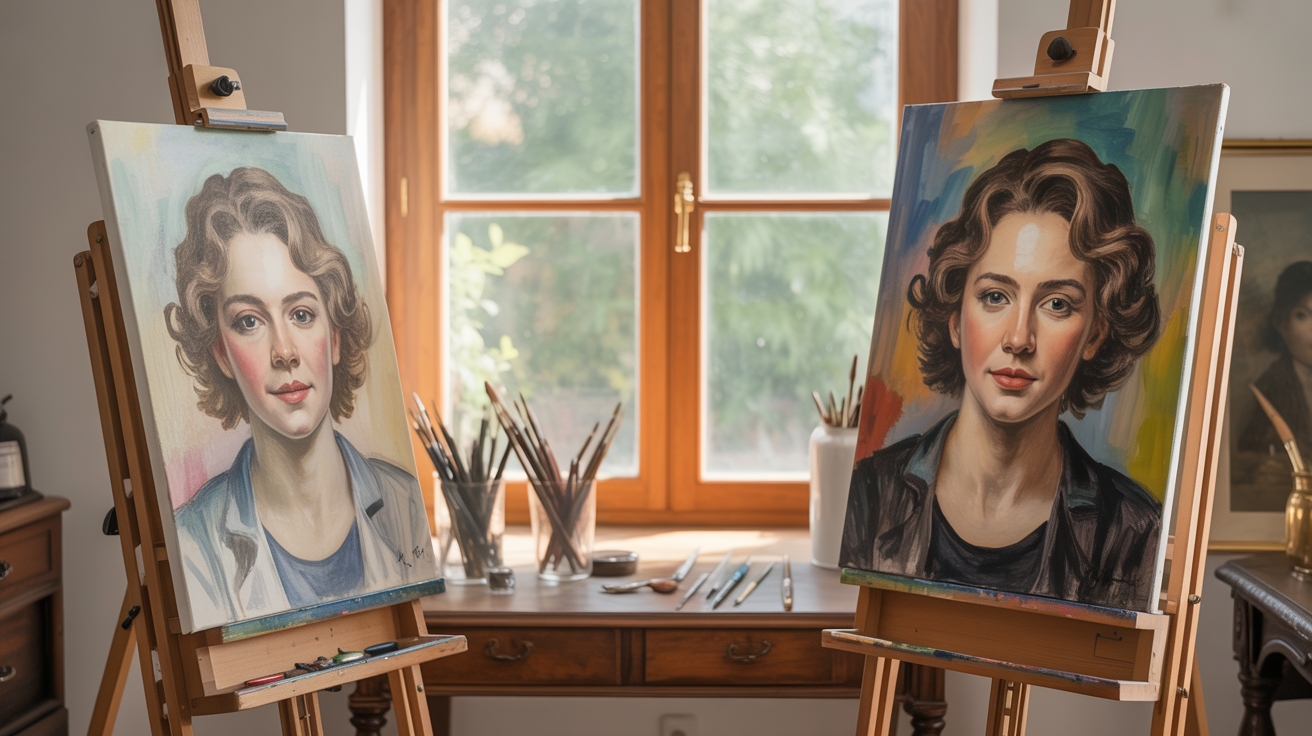
Two of the most beloved styles in portrait painting — and they could not be more different. This guide compares impressionist and realist oil portraits to help you choose the one that suits your home, your taste, and your subject.
Two Styles, Two Philosophies
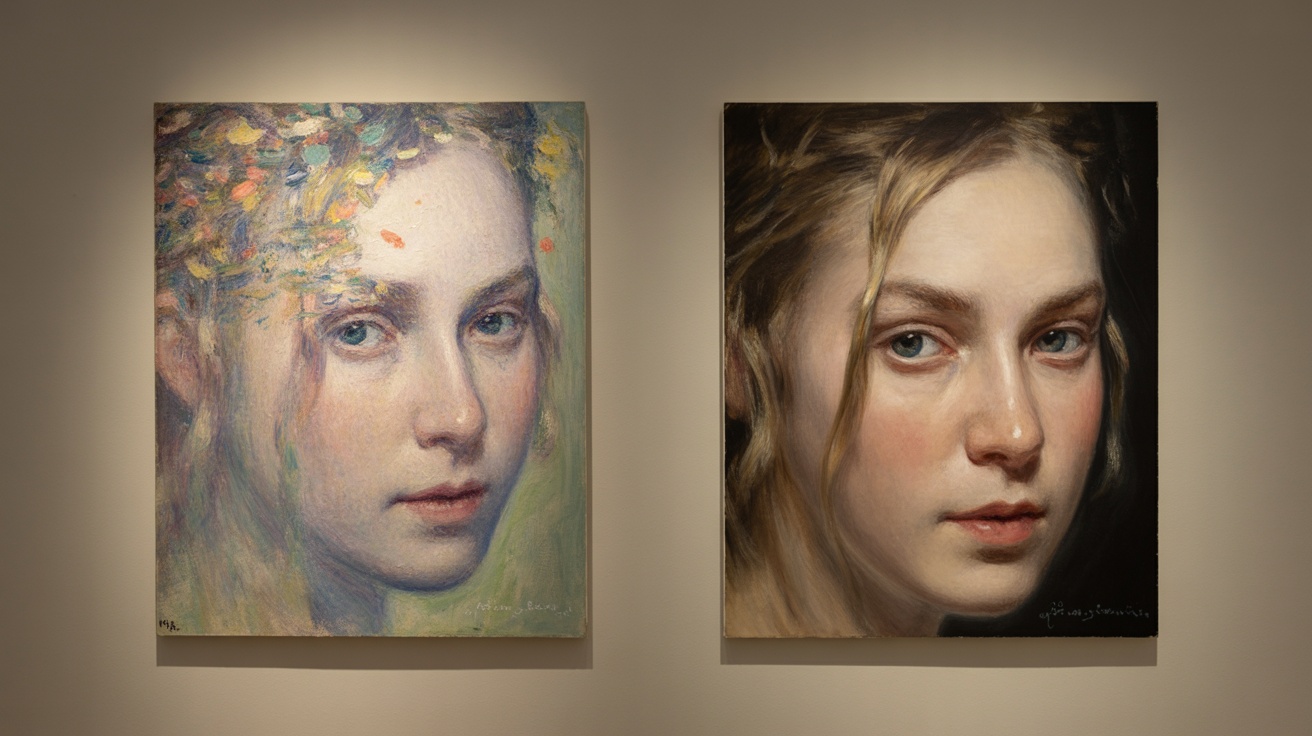
If realism is a mirror, impressionism is a poem.
Both are beautiful. Both are legitimate. Both produce portraits that will hang in your home for generations. But they do fundamentally different things with paint, and understanding that difference helps you choose the one that serves your portrait — and your room — best.
What Realism Does
The Approach
A realist portrait painter studies the photograph with clinical attention. They measure proportions. They mix colours to match skin tones precisely. They render details — the texture of hair, the reflection in an eye, the fold of fabric — with careful accuracy.
The goal is truth. The portrait should look like the person. Not idealised, not exaggerated, not interpreted — true.
The Brushwork
Realist brushwork is controlled and refined. Strokes are smooth, blended, and often invisible at normal viewing distance. The surface of the painting looks seamless — you see the subject, not the process.
The Colour Palette
Realist portraits use natural, measured colour. Skin tones match the reference photo closely. Backgrounds are typically neutral or complementary. The palette serves the subject rather than drawing attention to itself.
The Effect on a Wall
A realist portrait on a wall is a window. Visitors look at it and see a person — they engage with the subject, not the painting. It feels like a presence in the room.
What Impressionism Does
The Approach
An impressionist portrait painter studies the photograph for its light, its mood, its emotional content. They do not try to replicate every detail. Instead, they capture the impression of the subject — the warmth of the light on their skin, the character in their expression, the atmosphere of the moment.
The Brushwork
Impressionistic brushwork is visible, varied, and expressive. Strokes are loose, directional, and energetic. Up close, you see individual marks of colour. Step back, and those marks coalesce into a vibrant, living image.
The Colour Palette
Impressionists use colour expressively. Shadows might contain purples and blues. Skin tones might include unexpected greens and oranges. The palette is richer and more varied than reality — not inaccurate, but amplified.
The Effect on a Wall
An impressionist portrait on a wall is an event. It draws the eye with its colour and texture. It changes as the light in the room changes — different times of day reveal different aspects of the brushwork. It is simultaneously a portrait and a piece of fine art.
The Side-by-Side Comparison
| Aspect | Realism | Impressionism |
| Likeness accuracy | Very high | Moderate — captures essence rather than details |
| Brushwork | Smooth, often invisible | Visible, textured, energetic |
| Colour palette | Natural, measured | Vibrant, expressive, amplified |
| Viewing experience | See the subject | See the art and the subject |
| Best distance | Any distance | Best from a few feet back |
| Emotional tone | Honest, grounded, permanent | Luminous, atmospheric, alive |
| Interior match | Traditional, transitional | Modern, eclectic, artistic |
Which Style Suits Your Home?
Traditional Interiors
Best choice: Realism. The refined technique and natural palette of a realist portrait complements traditional furniture, warm wood tones, and classic décor. It feels like it has always belonged there.
Modern and Contemporary Interiors
Best choice: Impressionism. The colour vibrancy and visible texture of an impressionist portrait adds warmth and visual interest to clean, modern spaces. It becomes the room's most compelling feature.
Transitional Interiors
Both work. Transitional homes — those blending traditional and modern elements — can accommodate either style beautifully. The choice depends on whether you want the portrait to blend in (realism) or stand out (impressionism).
Eclectic Interiors
Best choice: Impressionism. In a room full of personality and varied influences, an impressionistic portrait adds another layer of visual richness without looking out of place.
Which Style Suits Your Subject?
A Grandparent or Elder
Realism honours the character and dignity of an older face. Every line tells a story, and realism tells it with respect and accuracy.
A Child
Both work beautifully. Realism captures their features at a specific moment in time. Impressionism captures their energy and light — the feeling of being around them.
A Pet
Realism delivers accurate likeness — owners want their pet to look exactly like their pet. Impressionism captures personality and movement — the joy of a bounding dog, the elegance of a resting cat.
A Couple
Impressionism adds romance. The soft edges, warm light, and atmospheric quality create a portrait that feels intimate and tender. Realism adds permanence — a record of two people as they are.
The Hybrid Approach
You do not have to choose one style exclusively. One of our most popular requests is a hybrid: a realistically rendered face (for accurate likeness) with an impressionistic background (for atmosphere and artistic interest).
This gives you the best of both worlds — the subject is recognisable and true, while the painting as a whole has the visual texture and colour richness of impressionism.
The Only Wrong Choice Is No Choice
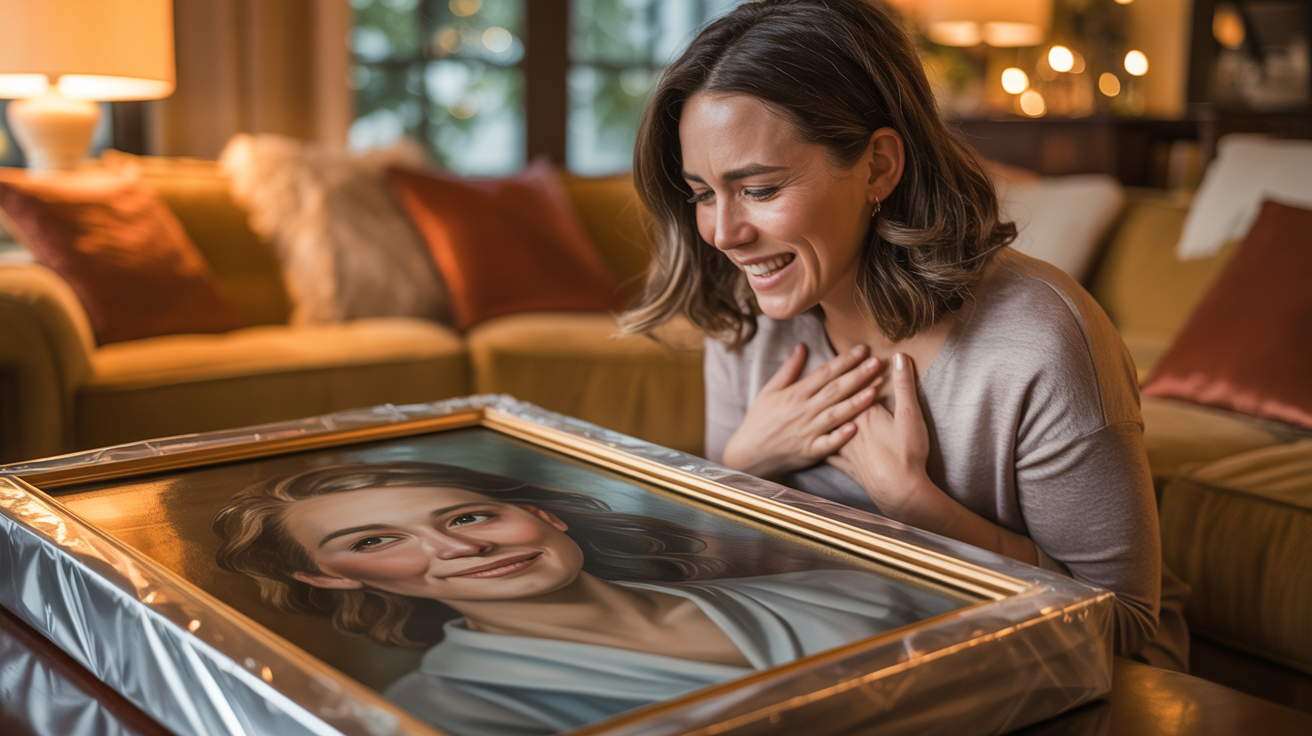
Both realism and impressionism produce portraits that will be treasured for generations. The right style depends on your taste, your home, and your subject. If you are unsure, describe your vision to us — our art team can guide you toward the style that will serve your portrait best.
Every PaintedForU portrait comes with unlimited free revisions, free shipping, and a 100% satisfaction guarantee.
Start your portrait now and choose the style that speaks to you.Frequently Asked Questions
What is the main difference between impressionist and realist portraits?
Realist portraits aim for lifelike accuracy — precise features, natural proportions, and detailed rendering. Impressionist portraits capture the impression of a subject using loose brushstrokes, vibrant colour dabs, and atmospheric light. Realism shows what someone looks like; impressionism shows what it feels like to be near them.
Which style is more popular for custom portraits?
Realism is more popular overall because most clients prioritise accurate likeness. However, impressionism is increasingly popular among clients who appreciate fine art and want a portrait with more artistic character.
Which style works better in a modern home?
Both work, but impressionism often integrates more naturally into contemporary and modern interiors because of its colour vibrancy and textural interest. Realism suits traditional, transitional, and eclectic interiors beautifully.
Can I get a portrait that combines both styles?
Yes. A popular hybrid approach uses realist technique for the face (accurate likeness) with an impressionistic background (loose, atmospheric brushwork). This gives you the best of both worlds.
Which style is better for a pet portrait?
Realism is the safer choice if accurate likeness is your priority. Impressionism captures personality and energy beautifully, especially for active or playful pets. Both styles produce stunning pet portraits.
Do impressionist portraits cost more than realist ones?
No. At PaintedForU, all styles are priced the same — based on canvas size and number of subjects. Prices start at $149 with unlimited free revisions and free shipping.
Sarah Chen
Senior Art Consultant
Sarah is a Senior Art Consultant at PaintForU with over 12 years of experience in custom portrait commissions. She specialises in helping clients choose the perfect style and composition for their portraits.
Ready to Create Your Portrait?
Free worldwide shipping, unlimited revisions, and 100% satisfaction guaranteed.
Start Your Portrait