How to Create a Stunning Gallery Wall with Custom Portrait Paintings
A step-by-step guide to designing a gallery wall using custom portrait paintings. Learn layout techniques, sizing strategies, and how to curate a wall that tells your family's story.
Why a Gallery Wall Changes Everything
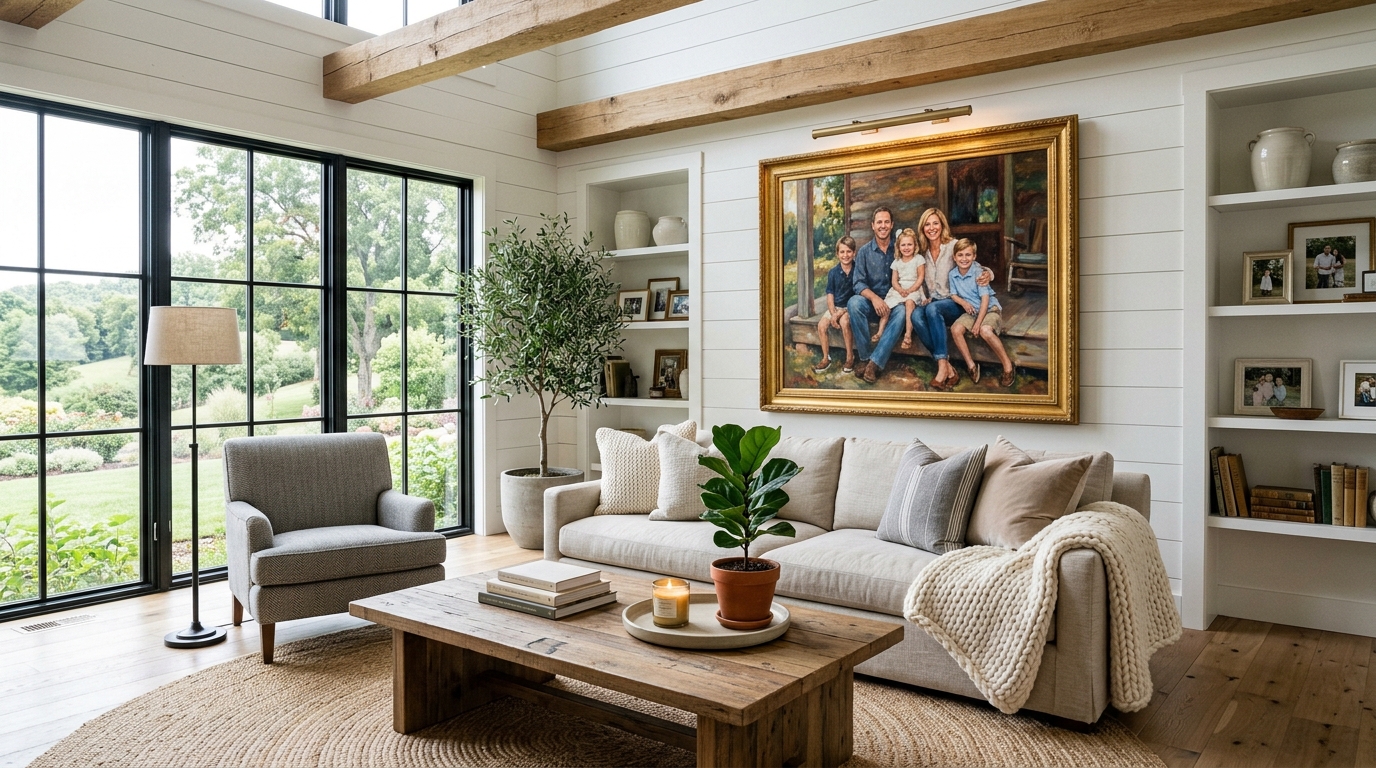
A single painting on a wall is beautiful. A gallery wall is transformative.
A thoughtfully arranged collection of custom portraits does something no single piece of art can do — it tells a story. Your family's story. Each painting is a chapter: the wedding day, the first child, the beloved pet, the grandparents who started it all. Together, they create a visual narrative that grows richer every time you add a new piece.
Gallery walls have become one of the most popular trends in interior design, and for good reason. They turn a blank wall into the most compelling feature of any room. And when those paintings are custom portraits — hand-painted in oil, watercolour, or pencil — the result is something truly extraordinary.
Planning Your Gallery Wall
Step 1: Choose Your Wall
Not every wall is right for a gallery display. The best gallery walls are:
- Visible — in a room where people spend time and guests naturally look
- Uninterrupted — free from windows, doors, or large furniture that would break the visual flow
- Well-lit — natural light or dedicated picture lighting makes the colours sing
- Proportional — the wall should be large enough to accommodate multiple pieces without looking cramped
- Living room feature wall
- Staircase wall (ascending layouts work beautifully)
- Dining room wall (guests spend time looking while seated)
- Hallway (creates a gallery experience as you walk through)
- Above a sofa or console table
Step 2: Decide on a Theme
The most powerful gallery walls have a unifying thread. For custom portraits, popular themes include:
The Family Timeline — portraits from different eras: your wedding, each child's birth, the family today. Arranged chronologically, this tells your family's story.
Generations — grandparents, parents, children, and grandchildren. Each generation represented in their own portrait creates a powerful visual legacy.
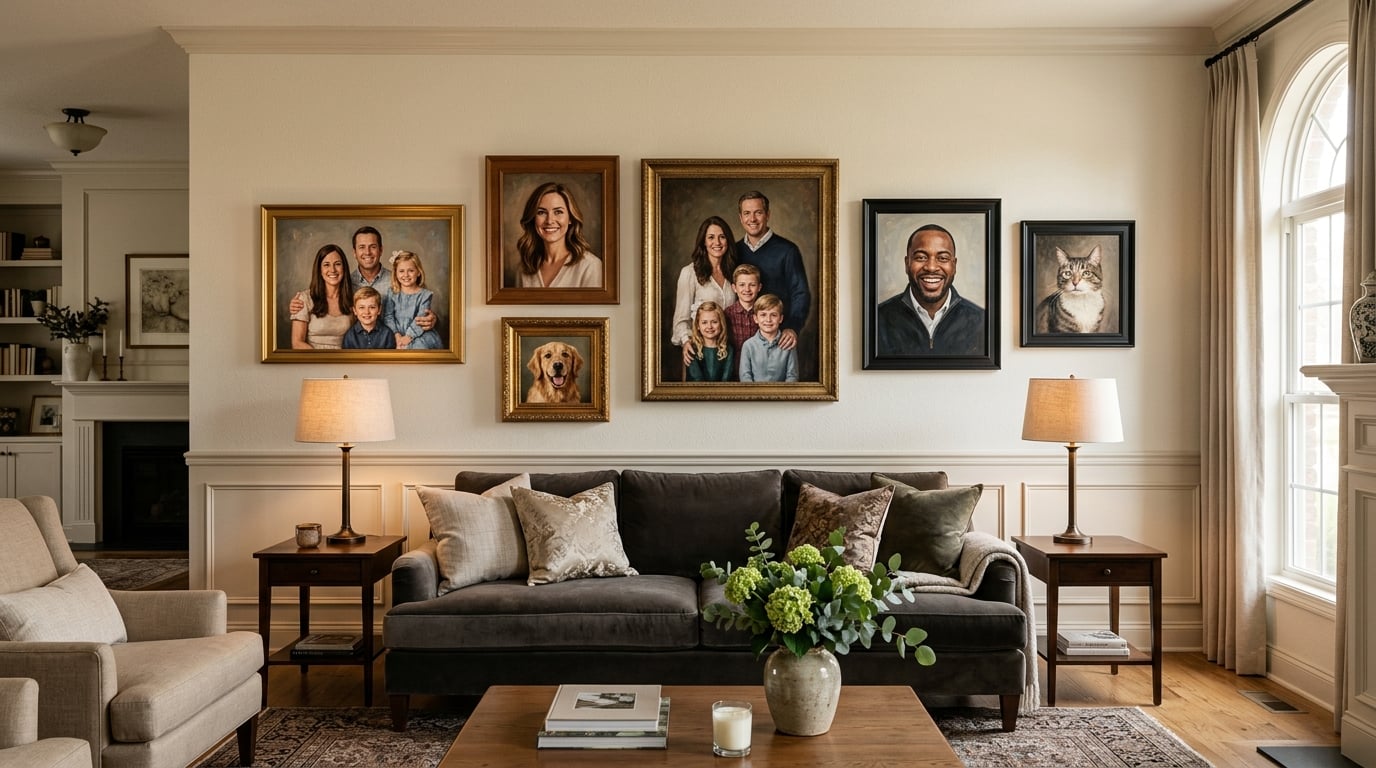
The Whole Family — individual and group portraits of everyone, including pets. This is the most common and most personal approach.
Matching Moments — portraits from the same occasion: everyone at the holiday dinner, each child on their graduation day, the family at each annual reunion.
Mixed Subjects — family members alongside landscapes, houses, or meaningful objects. This adds variety while keeping the collection personal.
Layout Strategies
The Grid
Portraits arranged in a symmetrical grid — evenly spaced, aligned horizontally and vertically. This creates a clean, formal, gallery-like appearance.
Best for: Same-sized canvases, traditional interiors, above a sofa or along a hallway.
Tips:
- Use identical frame styles for maximum visual cohesion
- Maintain exactly 2-3 inches between each frame
- Align the centre of the grid with the centre of the furniture below
The Salon Hang
A more organic arrangement where paintings of different sizes are grouped together, filling the wall from top to bottom. Named after the floor-to-ceiling arrangements in 18th-century Parisian salons.
Best for: Mixed-size canvases, eclectic or maximalist interiors, large walls.
Tips:
- Start with the largest piece as your anchor, slightly off-centre
- Build outward, filling gaps with smaller pieces
- Maintain consistent spacing (2-3 inches) even though the arrangement is asymmetrical
- Step back frequently to assess balance
The Horizontal Line
All paintings aligned along a single horizontal line — either by their centres or their top edges. This creates a clean, modern look.
Best for: Narrow walls, above a long console table, hallways.
Tips:
- Align the centre of each painting at 57 inches from the floor (standard gallery height)
- Mix sizes for visual interest while maintaining the central alignment
- Works well with 3-5 pieces
The Staircase Cascade
Portraits arranged along the ascending line of a staircase, stepping up with each stair.
Best for: Staircase walls, split-level homes.
Tips:
- Maintain a consistent distance between each painting and the stair line below
- Larger paintings at the bottom, smaller at the top creates a natural visual weight
- Use the railing line as your guide for alignment
The Centred Cluster
A tight grouping of paintings arranged around a central point, like a constellation. The negative space around the cluster makes it feel intentional and dramatic.
Best for: Feature walls, above a fireplace, in a dining room.
Tips:
- Choose one large anchor piece for the centre
- Surround with smaller pieces at consistent spacing
- The overall shape of the cluster should be roughly symmetrical — oval, diamond, or rectangular
Choosing Sizes and Proportions
The Anchor Piece
Every gallery wall needs one dominant piece that draws the eye and grounds the arrangement. This is typically your largest painting — a 24×36 or 20×24 — placed at or near the centre.
Supporting Pieces
Surrounding paintings should vary in size to create rhythm and visual interest. A mix of medium (16×20) and small (11×14) canvases works well.
The Right Mix
A balanced gallery wall typically follows this ratio:
| Wall Width | Recommended Mix |
| 4-5 feet | 1 large + 2-3 small |
| 6-8 feet | 1 large + 2 medium + 2-3 small |
| 8-10 feet | 1-2 large + 2-3 medium + 3-4 small |
| 10+ feet | 2 large + 3 medium + 4-5 small |
Mixing Styles Effectively
A gallery wall does not need to be all one style. In fact, mixing painting styles adds richness and visual depth.
Successful Combinations
- Oil paintings + pencil sketches — the richness of oil alongside the subtlety of pencil creates beautiful contrast
- Colour portraits + black-and-white — mixing full-colour oils with monochrome pencil sketches adds variety while staying cohesive
- Formal + casual — a traditional oil portrait beside a more relaxed watercolour creates an interesting tension
What to Keep Consistent
When mixing styles, maintain cohesion through one of these elements:
- Frame style — identical or complementary frames unify even very different paintings
- Colour palette — if all paintings share a warm tone or similar background colour, they feel connected
- Subject matter — when every painting is a portrait of someone you love, the emotional thread holds the wall together regardless of style differences
Framing for a Gallery Wall
Matching Frames
Identical frames create a clean, curated look. This works best with grid layouts and traditional interiors. Choose a frame style that complements your room — warm wood for rustic or traditional homes, sleek black or white for modern spaces.
Mixed Frames
Different frame styles add character and a collected-over-time feel. This works best with salon-hang layouts and eclectic interiors. To keep mixed frames from looking chaotic, stick to a maximum of 2-3 frame styles or materials.
No Frames (Gallery Wrap)
Canvas portraits can be displayed without frames, with the painting wrapping around the edges of the stretcher bar. This creates a clean, contemporary look and saves on framing costs.
The Paper Template Trick
Before putting any nails in the wall, use this technique to plan your layout perfectly:
- Cut paper templates the exact size of each framed painting
- Tape them to the wall using painter's tape
- Step back and assess the arrangement from across the room
- Adjust positions until the layout feels balanced
- Mark nail positions through the paper
- Remove the paper and hang the paintings
Lighting Your Gallery Wall
Good lighting transforms a gallery wall from pleasant to breathtaking.
Picture Lights
Individual LED picture lights mounted above each painting provide focused, warm illumination. This creates a gallery-quality presentation and draws the eye to the art.
Track Lighting
A ceiling-mounted track with adjustable spotlights lets you direct light to each painting individually. This is the most versatile option and allows easy adjustment as you add or rearrange paintings.
Wall Washers
Recessed ceiling lights that wash the entire wall with even illumination. This creates a clean, modern look and lights the wall uniformly.
Natural Light
If your gallery wall receives natural light, it will change character throughout the day as the light shifts. This is beautiful, but avoid direct sunlight, which can fade pigments over time. UV-filtering window treatments protect the art while preserving the natural light.
Growing Your Gallery Wall Over Time
One of the most rewarding aspects of a gallery wall is that it does not need to be finished all at once. In fact, building it gradually creates a richer, more personal collection.
Start with 3-4 Pieces
Begin with your most meaningful portraits — perhaps a wedding portrait, a family group, and a pet portrait. This establishes the anchor and the tone.
Add as Life Happens
New baby? Commission a portrait. Child graduates? Add it. New pet joins the family? They get a spot on the wall. Each addition marks a milestone and deepens the story your wall tells.
Leave Room to Grow
When planning your initial layout, leave deliberate gaps or choose a wall larger than your current collection needs. This gives you room to expand without rearranging everything.
A Wall That Tells Your Story
A gallery wall of custom portraits is more than decoration. It is a declaration of what matters to you — the people, the pets, the moments that define your life. Every guest who enters your home will stop, look, and understand: this is a family that values its bonds enough to immortalise them in art.
Every PaintedForU portrait includes unlimited free revisions, free shipping, and a 100% satisfaction guarantee.
Start building your gallery wall and turn your blank wall into your family's masterpiece.Frequently Asked Questions
How many portraits do I need for a gallery wall?
A gallery wall works with as few as three pieces and as many as fifteen or more. We recommend starting with 4-6 portraits for a balanced, impactful display. You can always add more over time — in fact, growing your gallery wall gradually is one of the most rewarding approaches.
Do all the portraits need to be the same style?
Not at all. Mixing styles — oil paintings alongside watercolours or pencil sketches — adds visual interest and depth to your gallery wall. The key is maintaining a cohesive element, whether that is a consistent colour palette, matching frames, or a shared subject matter like family portraits.
What size wall do I need for a gallery wall?
A gallery wall can work on any wall at least 4 feet wide. For a dramatic statement, a wall 6-10 feet wide is ideal. Measure your available space first, then plan your layout on the floor before hanging anything. We recommend leaving 2-3 inches between each frame for a clean, intentional look.
Sarah Chen
Senior Art Consultant
Sarah is a Senior Art Consultant at PaintForU with over 12 years of experience in custom portrait commissions. She specialises in helping clients choose the perfect style and composition for their portraits.
Ready to Create Your Portrait?
Free worldwide shipping, unlimited revisions, and 100% satisfaction guaranteed.
Start Your Portrait