
Custom Portrait Paintings for Nurseries and Kids' Rooms: Safe, Beautiful Art Your Family Will Treasure
Create a warm, personalised space for your little one with custom portrait paintings designed for nurseries and children's bedrooms. This guide covers choosing age-appropriate styles, safe hanging tips, sizing for small spaces, watercolour versus oil for kids' rooms, and portrait ideas from newborn to toddler that grow with your child.
Making the Nursery Personal
Designing a nursery is one of the most joyful parts of preparing for a new baby. Parents spend weeks choosing the perfect crib, selecting soft furnishings, and painting walls in gentle, welcoming colours. But the walls themselves — the largest visual surface in the room — are often left bare or decorated with mass-produced prints that could hang in any baby's room anywhere in the world.
A custom portrait painting changes that. It transforms the nursery from a beautifully decorated room into a deeply personal space that is uniquely and unmistakably your family's. A hand-painted portrait of your baby, your growing family, or even the family pet creates an emotional anchor that makes the nursery feel like home from day one.
Why Hand-Painted Art Matters in a Nursery
There is a practical and an emotional case for choosing hand-painted art over mass-produced prints for your child's room.
The Quality Difference
A hand-painted portrait on quality canvas or paper is made to last decades — far outliving the nursery phase. As your child grows, the painting moves with them: from nursery to bedroom to university dorm to their first apartment. It becomes a family heirloom that carries the emotional weight of those early, irreplaceable days.
Mass-produced prints fade, curl at the edges, and feel disposable. A painting endures.
The Personal Connection
Babies and young children are surrounded by manufactured objects. A hand-painted portrait introduces something genuinely unique into their environment — an object that was created specifically for them by a real person. As they grow old enough to understand, knowing that an artist painted their portrait by hand gives the piece a significance that a printed poster never has.
Developmental Benefits
Research in early childhood development suggests that infants and toddlers benefit from visual stimulation in their environment. A painting with varied textures, warm colours, and a recognisable human face provides the kind of rich visual input that supports cognitive development. The tactile quality of brushstrokes — visible even from across the room — adds a dimension that flat prints cannot offer.
Choosing the Right Style for a Nursery
The painting style you choose sets the tone for the room and should complement the existing nursery design.
Watercolour: The Nursery Favourite
Watercolour is the most popular style for nursery portraits, and it is easy to see why. The soft, translucent washes of colour create a gentle, dreamy quality that feels perfectly suited to a baby's room. Watercolour portraits have an inherent lightness — the white paper glowing through the paint — that prevents the artwork from feeling heavy or overly formal.
Watercolour works particularly well with:
- Pastel nursery colour schemes (blush, sage, sky blue, lavender)
- Scandinavian or minimalist nursery designs
- Light wood furniture and natural materials
- Rooms with abundant natural light
Oil Painting: Rich and Timeless
Oil painting creates a richer, more traditional portrait with deeper colours and visible brushwork. While it is less common in nurseries than watercolour, an oil portrait makes a powerful statement — it says this child was important enough to be immortalised in the same medium used by the great masters.
Oil painting works particularly well with:
- Traditional or classic nursery designs
- Darker or more saturated colour schemes (navy, forest green, burgundy)
- Formal or elegant interior styles
- Families who want a portrait that transitions easily to living room display as the child grows
Pencil Sketch: Minimalist and Modern
A pencil sketch portrait offers a quieter, more understated option. The monochrome palette and delicate linework suit minimalist nurseries where simplicity is the design philosophy. Pencil sketches also pair beautifully with black-and-white photography if you have a gallery wall planned.
Pencil sketch works particularly well with:
- Monochrome or neutral nursery palettes
- Modern, minimalist, or industrial nursery designs
- Small spaces where colour could feel overwhelming
- Gallery walls mixing photography and artwork
Portrait Ideas by Age
Each stage of your baby's early life offers different opportunities for portrait-worthy moments.
Newborn (0 to 4 Weeks)
The newborn phase is fleeting — those tiny fingers, the curled-up sleeping poses, the impossibly small features. A portrait painted from a newborn photo captures this ephemeral stage forever. Many parents choose a sleeping pose for newborn portraits, as the serene, peaceful expression translates beautifully into paint.
Tip: Schedule a newborn photo session (or simply take careful phone photos) in the first two weeks, when babies are sleepiest and most likely to curl into those iconic newborn poses. Natural window light works best.
Infant (3 to 6 Months)
By three months, babies are alert, social, and full of expression. This is when the first real smiles emerge, and those smiles make for radiant portraits. The 3-to-6-month window is often considered the sweet spot for baby portrait photography because the baby is expressive but not yet mobile.
Tip: Capture your baby during their happiest time of day — usually mid-morning, after a feed and a nap. Lay them on a soft, neutral-coloured blanket near a window.
Sitter (6 to 9 Months)
Once babies can sit up independently, a whole new range of poses opens up. A sitting portrait shows more of the baby's personality and physical development. The chubby cheeks, the curious eyes, the reaching hands — all of these details make for a dynamic, engaging painting.
Toddler (12 to 24 Months)
Toddler portraits capture personality in full bloom. The determined expression, the wild hair, the impish grin. Toddlers are harder to photograph (they never sit still), but the candid, movement-filled photos often produce the most characterful paintings. Do not worry about getting a perfectly still shot — our artists can work with action.
The First Birthday Portrait
The first birthday is a milestone that many families want to commemorate with a portrait. Whether it is the classic cake-smash photo or a more serene image, a first birthday portrait marks the end of the baby's first year in a permanent, meaningful way.
Sizing for Nurseries
Nurseries are typically the smallest bedroom in the house, so scale matters.
Above the Crib
This is the most popular nursery portrait placement. For safety and proportion, choose 8×10 or 11×14 inches. The painting should be centred above the crib width and hung high enough that it is out of reach as the baby grows into a toddler who can stand in the crib.
Above the Changing Table
A portrait above the changing table gives both parent and baby something beautiful to look at during nappy changes. 11×14 or 16×20 inches works well here, and since the changing table is lower than a standing adult, the painting can be hung at standard eye height.
The Nursery Gallery Wall
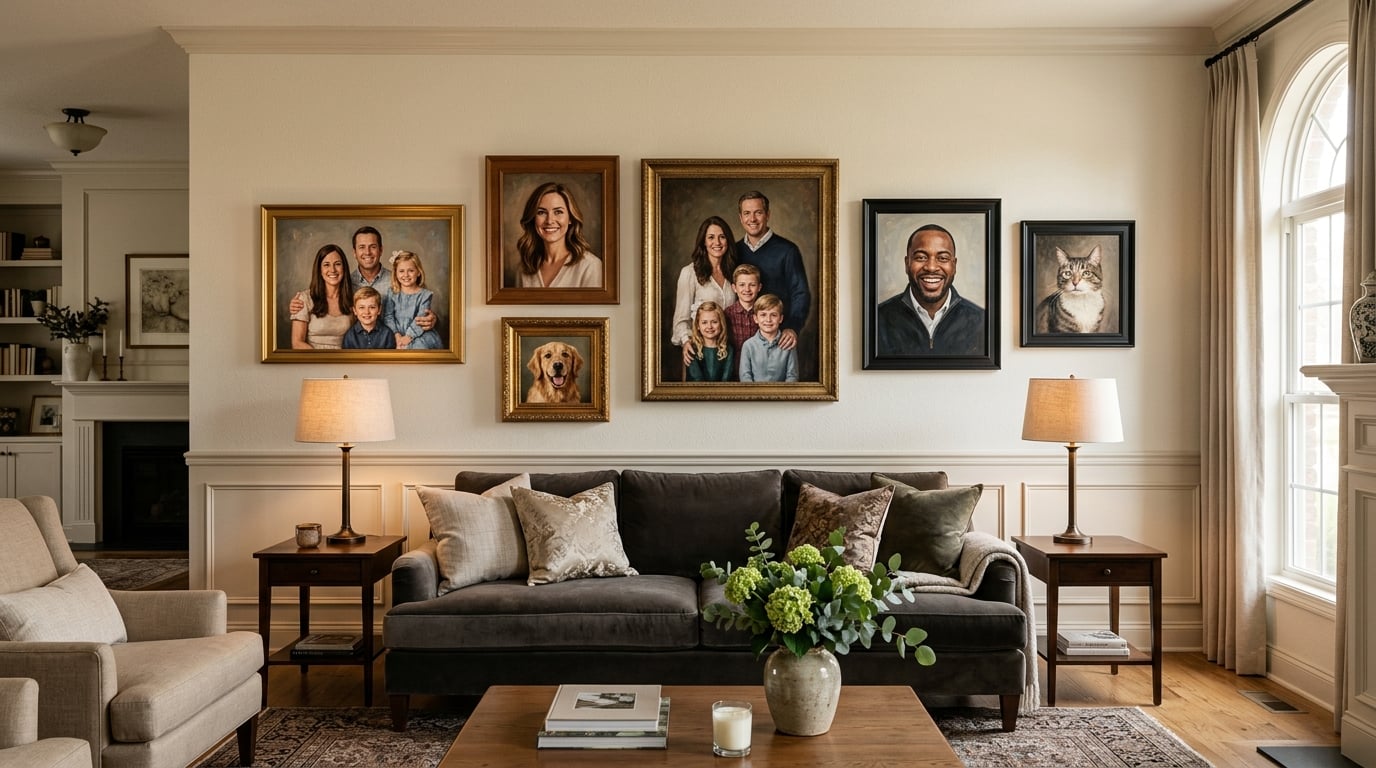
A small gallery wall combining a baby portrait with family photos, the baby's initial or name in calligraphy, and a small decorative print creates a curated, personal display. Use 8×10 inch portraits mixed with smaller frames for variety. Keep the arrangement tight (2 to 3 inches between frames) to maintain cohesion.
Feature Wall
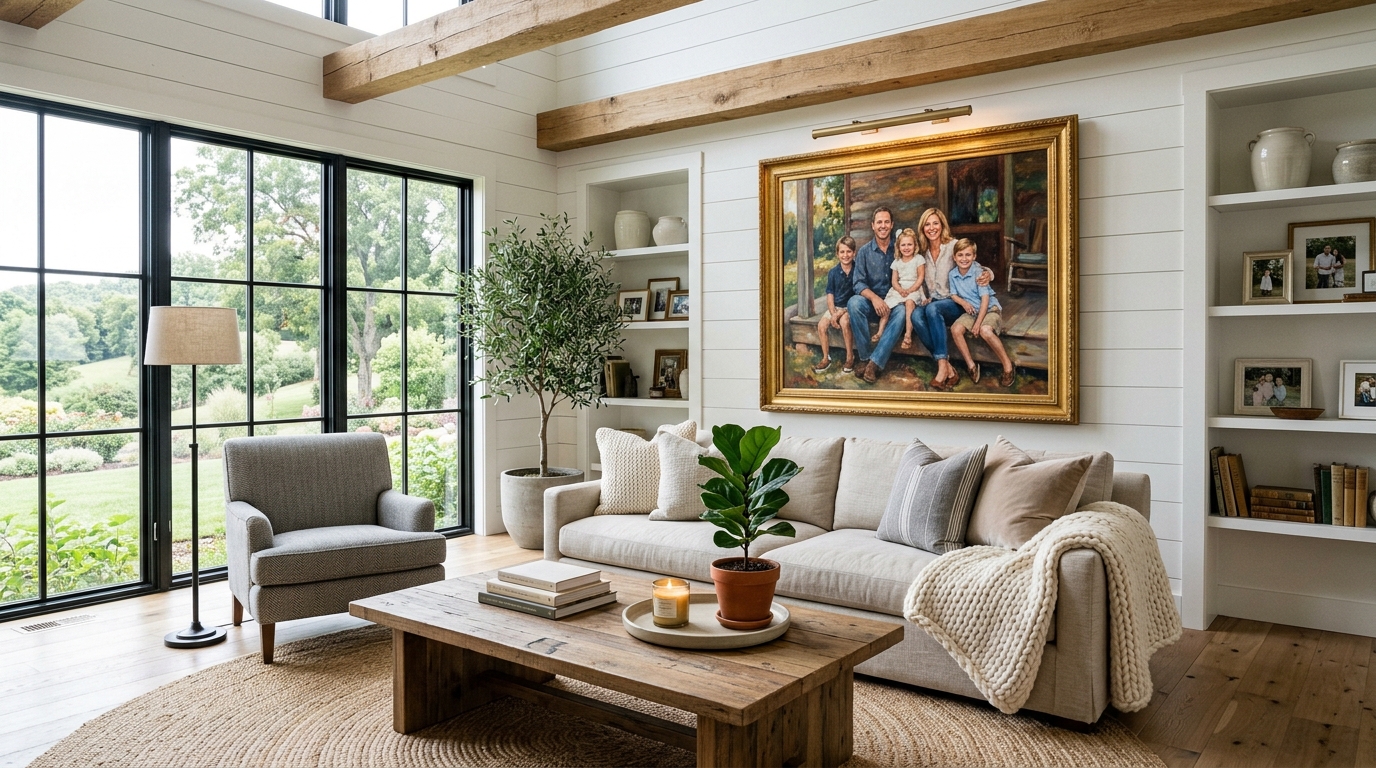
If the nursery has one accent wall (a painted wall, wallpapered wall, or wall with decals), a single 16×20 inch portrait centred on that wall creates a stunning focal point that ties the design together.
Safe Hanging Practices
Safety is the top priority in a nursery. Here is how to hang artwork securely.
Use Proper Wall Anchors
Never rely on a simple nail or adhesive hook for nursery art. Use wall anchors rated for at least twice the weight of the canvas. Toggle bolts or heavy-duty drywall anchors are the most secure options.
Avoid Heavy Frames Above the Crib
If hanging above the sleeping area, keep the artwork light. A gallery-wrapped canvas (no frame) is the lightest option. If you use a frame, choose a lightweight material like thin wood or aluminium rather than heavy ornate frames.
Secure With Wire and Two Hooks
Use a taut picture wire attached to two D-ring hangers on the back of the frame, hung from two wall hooks spaced apart. This distributes the weight and prevents the painting from tilting or falling if one hook shifts.
Height Considerations
Hang artwork high enough that it is out of reach of a standing toddler in a crib (the crib mattress at its lowest setting plus the child's height plus reaching arm). As a rule of thumb, the bottom edge of the painting should be at least 12 inches above the top of the crib rail.
Growing With Your Child
One of the most beautiful aspects of a custom portrait is that it does not belong exclusively to the nursery phase. As your child grows, the painting evolves with them.
Nursery to Bedroom
When the crib gives way to a toddler bed and eventually a twin bed, the portrait moves to a new position in the room. A baby portrait above a growing child's bed becomes a sweet, nostalgic anchor in their evolving space.
Building a Collection
Many families commission a new portrait at each milestone — newborn, first birthday, first day of school, and so on. Over the years, this creates a growing gallery of your child's life that is far more meaningful than a photo collage.
The Living Room Transition
Eventually, as the nursery becomes a child's room and the decor changes, many families move the baby portrait to the living room, hallway, or master bedroom. A beautifully painted baby portrait is appropriate art for any room in the home, at any stage of life.
Family Portraits for the Nursery
A family portrait — parents, baby, and perhaps siblings or a pet — is one of the most emotionally powerful pieces of art you can place in a nursery. The baby is surrounded by the faces of their family from their earliest days, creating a visual sense of security and belonging.
When to Commission
The best time to photograph for a family nursery portrait is 2 to 4 weeks after the baby arrives, when the family has begun to settle but the baby is still tiny. Alternatively, a maternity photo or hospital first-meeting photo can make for a deeply emotional portrait.
Including Older Siblings
If there are older children, including them in the nursery portrait helps them feel connected to the new baby and to the nursery space. A painting of a big sister or brother holding the baby is a timeless, heartwarming subject.
Including Pets
Don't forget the family pet. A dog or cat in a family nursery portrait adds warmth, personality, and often a charming touch of chaos that makes the painting feel authentic and alive.
Ordering Your Nursery Portrait
Creating a custom portrait for your nursery through PaintedForU is simple and enjoyable:
- Upload your favourite baby or family photo — newborn, infant, or toddler.
- Select your painting style — watercolour, oil painting, or pencil sketch.
- Choose the perfect size — from intimate 8×10 to statement 16×20.
- Add any special instructions — background changes, sibling or pet inclusion, custom details.
- Review your digital preview — with unlimited free revisions until it is perfect.
Frequently Asked Questions
What painting style is best for a nursery?
Watercolour is the most popular choice for nurseries because its soft, translucent quality complements the gentle colour palette of most nursery designs. The lightness of watercolour feels age-appropriate and airy. Oil painting is also a beautiful option if you want a richer, more traditional look — and it lasts exceptionally well over the decades. Pencil sketches suit minimalist or monochrome nurseries.
When is the best time to photograph a baby for a portrait?
For newborn portraits, the first two weeks offer the most serene, curled-up sleeping poses. For alert, expressive portraits, 3 to 6 months is ideal — babies are social, smiley, and not yet mobile. Toddler portraits (12 to 24 months) capture personality and character. There is no wrong time; our artists can create beautiful work from any age.
Is it safe to hang a painting above a crib?
Yes, when hung securely using proper wall anchors rated for the weight of the canvas. Avoid hanging directly above where the baby sleeps if the canvas is large or heavy — instead, position it on the wall beside the crib or above a changing table. For above-crib placement, lightweight canvases (8×10 or 11×14) with secure fixings are the safest option.
What size portrait works best in a nursery?
For above a crib, 8×10 or 11×14 inches is ideal — small enough to be safe and proportional to the crib width. For a dedicated nursery gallery wall, mix 8×10 and 11×14 sizes. For a feature wall, 16×20 inches creates a beautiful focal point. Nurseries are typically smaller rooms, so avoid oversized canvases that can feel overwhelming.
Will a portrait painting work as the child grows up?
Absolutely. A well-painted portrait transcends nursery decor. As the child grows, the painting moves from the nursery to their bedroom, then perhaps to the family hallway or living room. Many of our clients commission portraits at different ages — newborn, first birthday, school age — creating a growing collection that documents their child's journey.
Can you paint a family portrait for the nursery?
Yes — a family portrait including the parents and baby is one of our most popular nursery commissions. It creates a warm, loving focal point that surrounds the baby with the faces of their family. You can also include siblings, grandparents, or the family pet for an even more personal touch.
Sarah Chen
Senior Art Consultant
Sarah is a Senior Art Consultant at PaintForU with over 12 years of experience in custom portrait commissions. She specialises in helping clients choose the perfect style and composition for their portraits.
Ready to Create Your Portrait?
Free worldwide shipping, unlimited revisions, and 100% satisfaction guaranteed.
Start Your Portrait