Custom Paintings for the Kitchen and Dining Room: A Complete Style Guide
The kitchen and dining room are the heart of every home. Here is how to choose, size, and display custom portrait paintings and art in these spaces — from countertop-friendly sizes to statement pieces above the dining table.
The Heart of the Home
The kitchen is where the day begins and where it often ends. It is where coffee is poured before anyone has spoken a word. Where homework is spread across the counter. Where someone stirs a pot while someone else sets the table. Where the family actually lives.
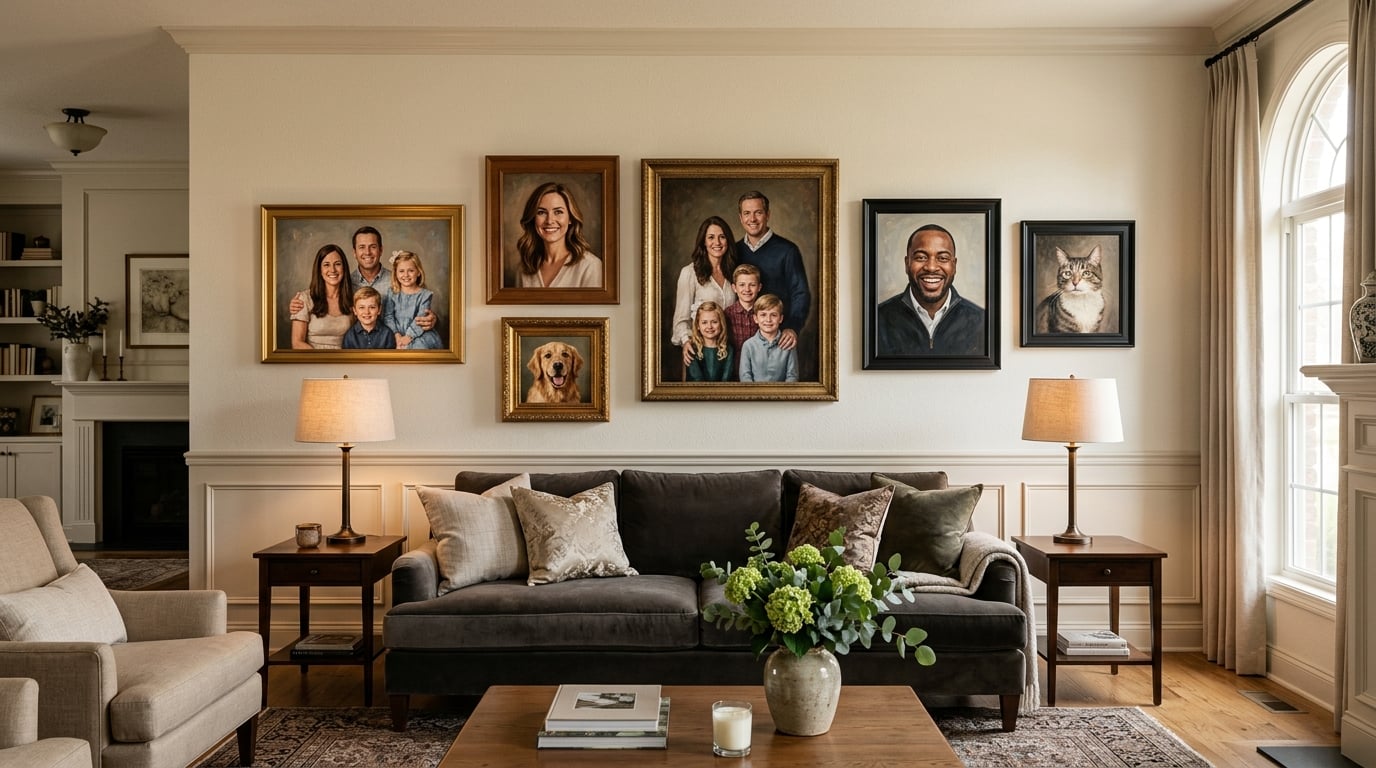
And yet, when people think about decorating with custom art, the kitchen and dining room are often the last rooms they consider. The living room gets the portrait above the mantle. The bedroom gets the quiet piece above the headboard. The kitchen gets a clock and some herbs in pots.
This is a missed opportunity.
A custom painting in the kitchen or dining room does not just fill a wall. It transforms the emotional centre of your home into something that feels considered, personal, and beautiful.
Why These Rooms Deserve Art
The Dining Room: Conversation and Connection
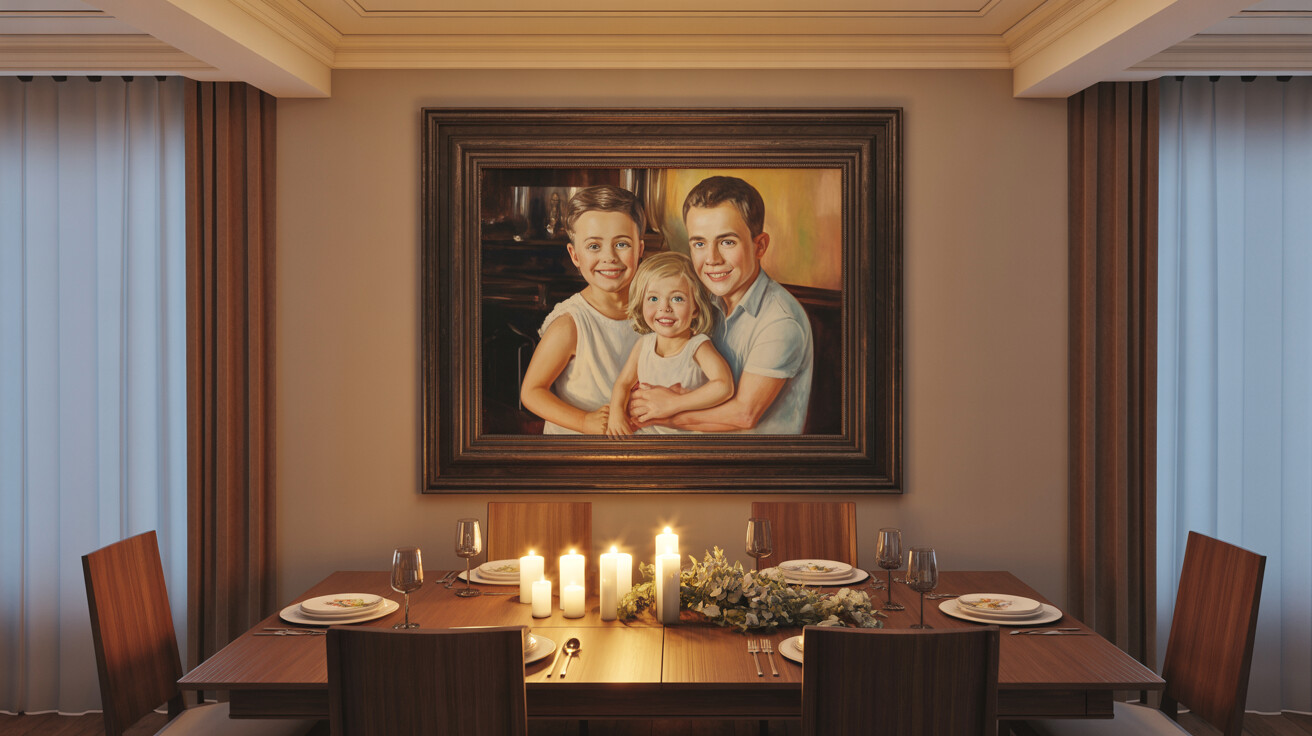
A dining table is where families connect. Birthdays are celebrated here. Holidays are shared here. Difficult conversations happen here, and so do joyful ones. A custom portrait above the dining table — a family portrait, a couple portrait, a painting of grandparents — becomes part of that ritual. It is the first thing guests notice and the last thing the family sees before clearing the plates.
The Kitchen: Warmth and Memory
The kitchen is the most emotionally resonant room in most homes. It smells like breakfast and sounds like laughter. A custom painting — perhaps a beloved pet, a child at age three, a wedding photograph transformed into oil — adds a layer of personal meaning to a space that is already rich with memory.
Choosing the Right Subject
Family Portraits
The dining room is the natural home for a family portrait. The subject matter — togetherness, connection, shared history — mirrors the purpose of the room itself. A painting of the family reinforces the sense that this table is where this family belongs.
Pet Portraits
Pets are part of the family, and the kitchen is often their favourite room (for obvious reasons). A custom pet portrait in the breakfast nook or on the wall beside the pantry is a daily reminder of a companion who makes the house feel like home.
Children's Portraits
A painting of a child — a toddler with ice cream on their face, a teenager in their first formal outfit, siblings laughing together — brings warmth and personality to a kitchen or dining space. These paintings become more precious as children grow.
Couple Portraits
For couples without children, or for a more intimate dining space, a couple portrait above the table creates a sophisticated focal point. Impressionist oil is particularly beautiful in dining rooms — the soft brushwork and warm tones complement candlelight perfectly.
Sizing Your Painting
Above the Dining Table
The most common placement for a dining room painting is centred above the table. The general rule is that the painting should be approximately two-thirds to three-quarters the width of the table.
- 4-seat table (48 in): 16×20 in or 20×24 in painting
- 6-seat table (72 in): 24×36 in or 30×40 in painting
- 8-seat table (96 in): 30×40 in or larger
Kitchen Walls
Kitchen wall space is often limited by cabinets, windows, and appliances. Look for dead wall space — areas that are visible but not functional. Common locations include:
- The wall at the end of a galley kitchen
- Above a breakfast bar or counter
- In a breakfast nook or banquette area
- The wall adjacent to (not above) the cooking zone
Kitchen Shelves and Countertops
Smaller paintings (8×10 in or 11×14 in) can lean against a backsplash on a shelf or sit on a countertop on a small easel. This is a casual, approachable way to display art in a kitchen — and it avoids the question of where to hang it entirely.
Protecting Your Painting
Kitchens present unique challenges for art — heat, humidity, grease, and steam. Here is how to protect your investment.
Location
- Avoid: Directly above the stove, beside the dishwasher vent, or in the path of steam from a kettle or pot.
- Ideal: A wall at least 4–6 feet from the cooking zone, in the dining area, or in a breakfast nook.
Ventilation
Good ventilation is the single most important factor. Use your range hood or exhaust fan while cooking. If your kitchen has no hood, open a window. Proper ventilation reduces grease and moisture in the air, protecting not just your painting but your cabinets and walls too.
Varnish
Every PaintedForU oil painting is finished with a protective varnish that shields the paint surface from dust, moisture, and UV light. This varnish can be cleaned with a soft, dry cloth. For stubborn dust, a slightly damp (not wet) microfibre cloth works well.
Framing
A quality frame with glass or acrylic glazing provides an additional layer of protection — particularly useful in kitchens. Museum-quality UV-filtering glass protects against both grease and light damage.
Style and Colour Considerations
Warm Kitchens
Kitchens with wood tones, warm lighting, and traditional cabinetry pair beautifully with realist oil portraits in warm-toned frames (gold, honey oak, dark walnut). The natural warmth of oil paint complements these spaces perfectly.
Modern Kitchens
Clean-lined kitchens with white cabinets, marble counters, and stainless steel appliances can handle bolder art. A portrait in a simple float frame or a minimalist black frame provides a striking contrast against a neutral backdrop.
Rustic Kitchens
Farmhouse and cottage kitchens suit a wider, more ornate frame. Watercolour portraits work particularly well in these spaces — their soft, translucent quality complements the relaxed, inviting atmosphere.
Making It Work
A custom painting in the kitchen or dining room is not about following a design trend. It is about acknowledging that the room where your family gathers, eats, and connects deserves something more personal than a mass-produced print.
The right painting — the right subject, the right size, the right placement — makes a kitchen feel like your kitchen. It makes a dining room feel like the place where your family's story unfolds.
Every PaintedForU portrait comes with unlimited free revisions, free worldwide shipping, and a 100% satisfaction guarantee.
Start your portrait now and bring custom art into the heart of your home.Frequently Asked Questions
Can you hang an oil painting in a kitchen?
Yes, with some care. Avoid hanging oil paintings directly above a stove or in areas exposed to steam, grease splatter, or extreme temperature fluctuations. A wall adjacent to the cooking area, a breakfast nook, or a dining area connected to the kitchen are all excellent locations.
What size painting works best above a dining table?
The painting should be approximately two-thirds to three-quarters the width of the dining table. For a standard 6-seat table (about 72 inches wide), a 24×36 inch or 30×40 inch painting works beautifully. Hang it so the centre is at eye level when seated — roughly 48–52 inches from the floor.
Will cooking fumes damage an oil painting?
Prolonged exposure to cooking grease and smoke can dull the surface of an oil painting over time. A protective varnish (which PaintedForU applies to all paintings) provides a significant layer of protection. For kitchens, ensure good ventilation and avoid placing the painting near the stovetop.
What subjects work well for kitchen and dining room paintings?
Family portraits are the most popular choice for dining areas — they reinforce the sense of togetherness associated with shared meals. Pet portraits, couple portraits, and children's portraits also work beautifully. The key is choosing a subject that sparks joy and conversation.
Should I match the painting frame to my kitchen cabinets?
Not necessarily. The frame should complement the painting and the overall room aesthetic. A warm gold or natural wood frame works well in most kitchens. Modern kitchens with clean lines might suit a simple float frame. Avoid matchy-matchy — a slight contrast is more visually interesting.
How do I protect a painting in a humid kitchen?
Ensure good ventilation with an exhaust fan or open windows while cooking. Avoid hanging the painting in direct steam paths. The protective varnish applied by PaintedForU helps repel moisture. If your kitchen is exceptionally humid, consider placing the painting in the adjacent dining area instead.
Sarah Chen
Senior Art Consultant
Sarah is a Senior Art Consultant at PaintForU with over 12 years of experience in custom portrait commissions. She specialises in helping clients choose the perfect style and composition for their portraits.
Ready to Create Your Portrait?
Free worldwide shipping, unlimited revisions, and 100% satisfaction guaranteed.
Start Your Portrait