How to Style a Custom Portrait Painting in Your Living Room
A custom portrait painting deserves more than a nail in the wall. Learn how to light it, frame it, and position it so that it becomes the emotional centrepiece of your living room.
A Painting Deserves a Stage
You have commissioned a custom portrait. The artist has captured the face you love — your family, your pet, your partner — with the warmth and skill that only hand-painted art can deliver. The painting arrives. You unwrap it. You hold it up to the wall.
And then what?
The difference between a portrait that transforms a room and a portrait that merely occupies a wall comes down to styling. The placement, the framing, the lighting, the surrounding décor — these decisions determine whether your painting becomes the emotional centrepiece of your living room or simply another object on the wall.
This guide covers everything you need to know to style your custom portrait with the attention it deserves.
Choosing the Right Wall
The Focal Wall
Every living room has a natural focal point — the wall your eyes are drawn to when you enter the room. This is usually the wall opposite the main entrance, above the fireplace, or behind the primary seating area. This is where your portrait belongs.
A portrait on a focal wall:
- Is the first thing visitors see
- Anchors the room's visual hierarchy
- Receives the most natural attention
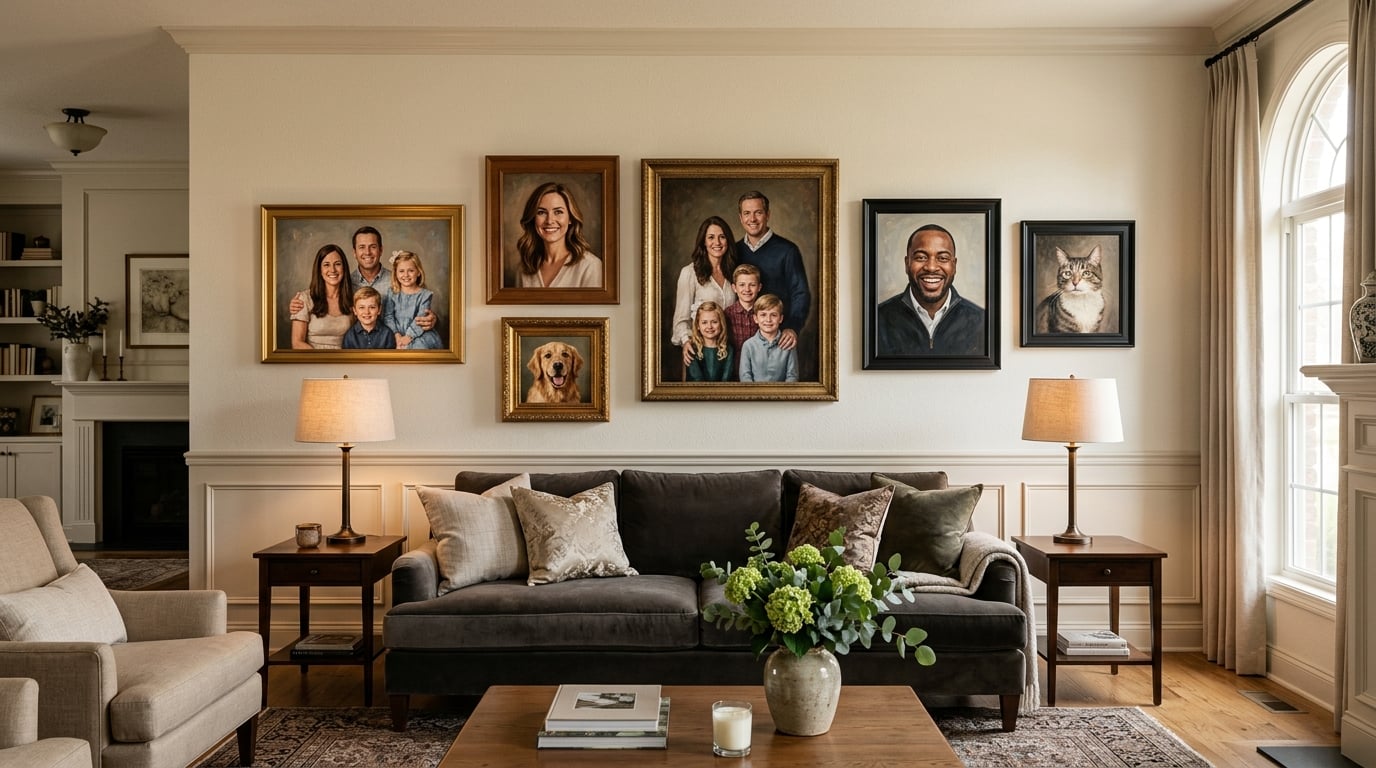
Above the Sofa
The most popular placement in living rooms worldwide. The painting should be centred above the sofa and approximately two-thirds of its width. The bottom edge of the painting should sit 6–8 inches above the sofa back. This creates a natural visual connection between the furniture and the art.
Above the Fireplace
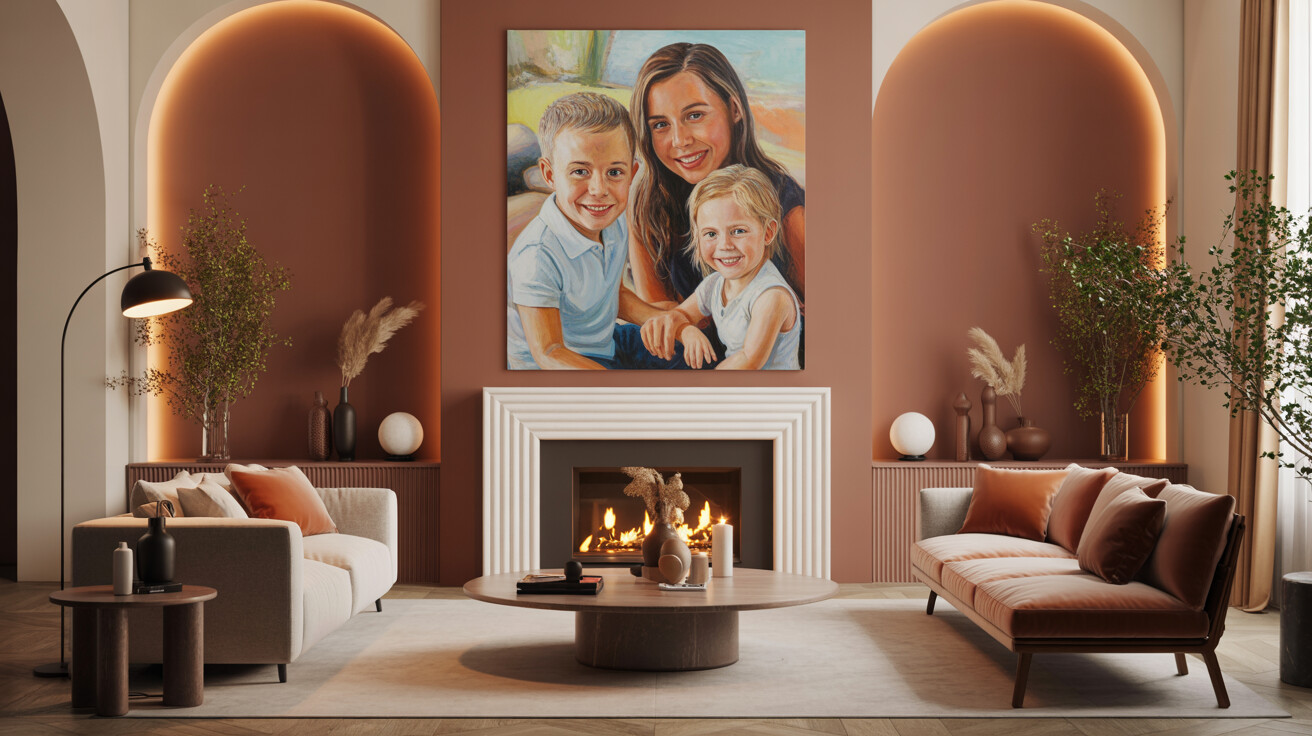
A fireplace mantel is an architectural invitation for art. The painting should be slightly narrower than the mantel and centred above it. Be mindful of heat — if the fireplace is regularly used, ensure the painting is high enough to avoid prolonged exposure to rising warm air.
A Dedicated Art Wall
If you have a wall with no furniture below it, the painting becomes a pure statement piece. Centre it at eye level (57–60 inches from floor to centre) and let the empty space around it breathe. The negative space is part of the design.
Framing Your Portrait
The frame is the border between your painting and your room. It should enhance both without dominating either.
For Traditional Interiors
- Gold or gilt frames — timeless, elegant, and particularly beautiful with oil portraits
- Dark wood frames — walnut, mahogany, or espresso finishes add warmth and gravitas
- Ornate frames — carved or decorative frames suit formal living rooms and period homes
For Modern Interiors
- Slim black frames — clean, minimal, and contemporary
- Natural oak or maple — warm but understated
- Floating frames — the painting appears to hover within the frame, creating a gallery effect
For Eclectic Spaces
- Vintage or antique frames — found frames from markets or antique shops add character
- Coloured frames — a bold frame colour that picks up a tone from the painting
The Rule
If in doubt, choose a frame that is simpler than you think you need. The painting is the star. The frame is the supporting actor.
Lighting Your Portrait
Lighting is the single most impactful styling decision after placement. A well-lit portrait glows. An unlit portrait hides.
Picture Lights
A dedicated picture light mounted above the frame is the classic gallery approach. Choose warm-toned LED lights (2700K–3000K) that enhance the painting's colours without creating glare. Brass or bronze picture lights suit traditional frames; matte black suits modern ones.
Track Lighting
Adjustable track lighting on the ceiling allows you to direct a focused beam onto the painting. This creates dramatic shadows and highlights that emphasise the brushwork and texture of an oil painting.
Natural Light
Natural light is beautiful but requires caution. Indirect natural light — bounced off walls or filtered through curtains — enhances a painting without risk. Direct sunlight, however, will fade pigments over time. Never hang an oil painting in direct sunlight.
Ambient Enhancement
Even without dedicated picture lighting, you can enhance your portrait with well-placed floor lamps or wall sconces that cast warm light in the painting's direction. The goal is to ensure the portrait is never in shadow when the room is in use.
Colour Coordination
Your portrait does not need to match your sofa. But thoughtful colour coordination creates a sense of intentional design.
Pull Colours From the Painting
Identify two or three colours in the portrait — a warm skin tone, a background hue, the colour of clothing. Echo those colours in your living room through cushions, throws, vases, or candles. This creates visual cohesion without the painting looking like it was chosen to match the curtains.
Neutral Walls Win
White, cream, light grey, and warm beige walls allow the painting to shine. Bold wall colours can work but require more careful coordination. If your walls are already colourful, choose a frame that bridges the gap between the wall colour and the painting.
Complementary Textures
An oil painting has texture — visible brushstrokes, layers of paint, physical depth. Complement this with tactile elements in your décor: linen cushions, wool throws, ceramic vases, natural wood. The combination of painted texture and material texture creates a rich, layered interior.
Styling the Surrounding Space
Below the Painting
What sits beneath the painting matters. If the painting hangs above a console or mantel, style the surface below it with intention:
- A pair of candlesticks or small lamps flanking the painting
- A small vase of fresh flowers
- Books or a decorative tray
- Keep it simple — the items should support the painting, not compete with it
On Either Side
Symmetrical elements on either side of the painting — matching sconces, identical shelves, paired plants — create formality and balance. Asymmetrical styling — a tall plant on one side, nothing on the other — creates a more relaxed, contemporary feel.
Nothing at All
Sometimes the most powerful styling choice is restraint. A large portrait on an empty wall, with nothing below and nothing beside it, commands attention through sheer confidence. Let the painting speak for itself.
Common Mistakes to Avoid
Hanging Too High
The most common mistake. If you have to tilt your head back to see the painting, it is too high. Centre at eye level, adjust for furniture below.
Choosing a Frame That Competes
An ornate frame on a minimalist wall — or a thin frame around a grand painting — creates visual dissonance. Match the frame's formality to the room's character.
Ignoring the Lighting
A beautiful painting in a shadowy corner is a beautiful painting nobody sees. Light it.
Cluttering the Wall
If the portrait is your focal piece, do not surround it with competing artwork, mirrors, or wall décor. Give it space to breathe and dominate.
Make It the Heart of the Room
A custom portrait painting is not just wall art. It is the emotional centre of a room — the piece that makes visitors pause, that sparks conversations, that reminds your family every day of the faces and moments that matter most.
Style it with the care it deserves, and it will transform your living room from a decorated space into a meaningful one.
Every PaintedForU portrait comes with unlimited free revisions, free shipping, and a 100% satisfaction guarantee.
Start your portrait now and create the centrepiece your living room is waiting for.Frequently Asked Questions
Where is the best place to hang a portrait in a living room?
Above the sofa or fireplace are the most popular choices. The painting should be at eye level (centre at 57–60 inches from the floor) and two-thirds the width of the furniture below it. Choose the spot where it will receive the most natural attention.
What type of frame works best for an oil painting?
For oil paintings, a simple floating frame or classic wood frame works beautifully. Gold or dark wood frames suit traditional interiors, while slim black or natural oak frames complement modern spaces. The frame should enhance the painting, not compete with it.
Should I add lighting to my portrait painting?
Yes, picture lighting transforms a portrait. A warm-toned picture light mounted above the frame, or adjustable track lighting, enhances colours and creates a gallery-quality focal point. Avoid direct sunlight, which can fade pigments over time.
How do I match a portrait painting to my room decor?
The painting does not need to match your colour scheme exactly. Instead, pick up one or two accent colours from the painting and echo them in cushions, throws, or accessories. This creates visual cohesion without being heavy-handed.
Can a portrait painting work in a modern or minimalist room?
Absolutely. A figurative oil painting actually provides beautiful contrast in a minimalist space. The warmth and texture of the painting becomes the room's focal point, adding depth and personality that clean modern interiors sometimes lack.
Should I hang one large painting or several smaller ones?
Both approaches work. A single large painting creates a bold focal point with clean visual impact. A curated arrangement of smaller paintings creates a gallery wall with more visual texture. Choose based on your wall size and personal style.
Marcus Rivera
Lead Portrait Artist
Marcus is PaintForU's lead portrait artist and studio director. With a Fine Arts degree from the Royal Academy, he brings deep knowledge of oil painting techniques to every guide he writes.
Ready to Create Your Portrait?
Free worldwide shipping, unlimited revisions, and 100% satisfaction guaranteed.
Start Your Portrait